
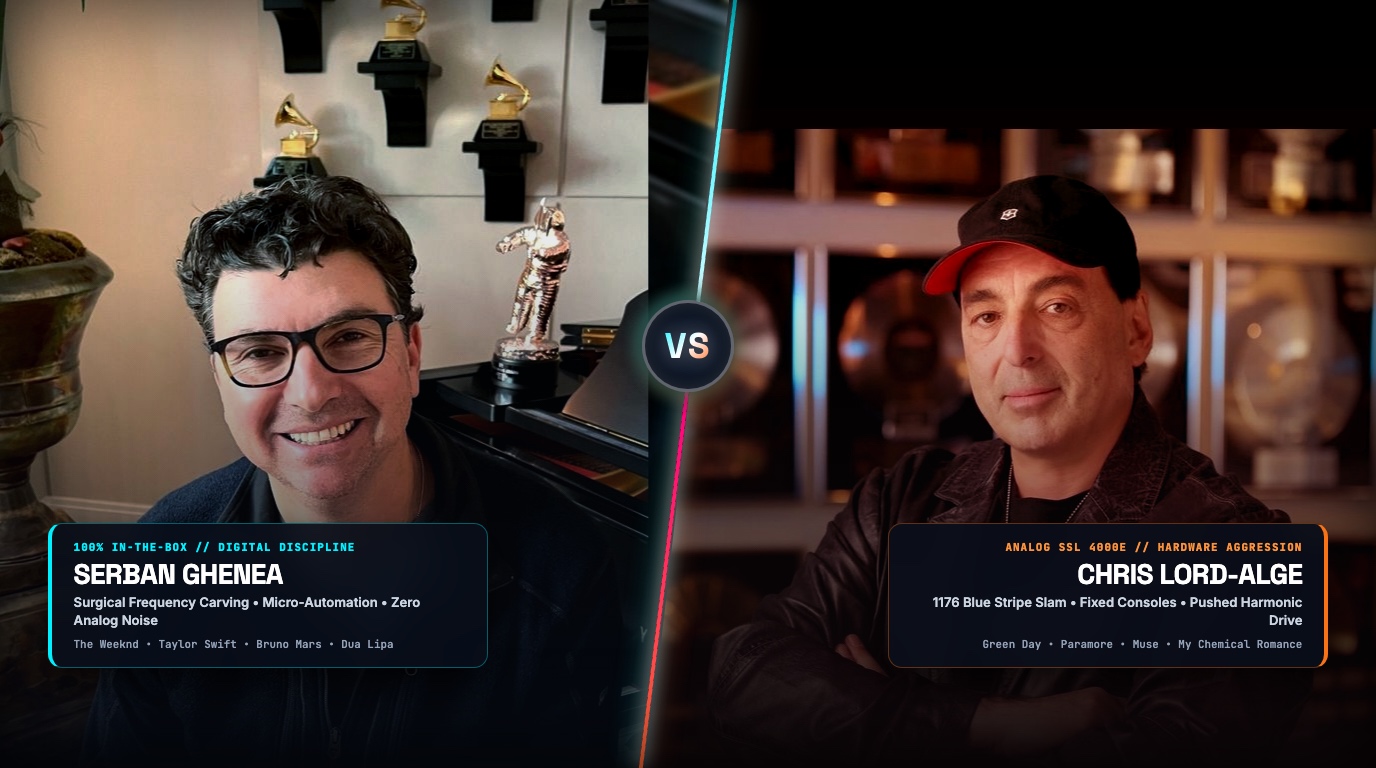
Between them, Serban Ghenea and Chris Lord-Alge (CLA) have mixed the soundtrack of your entire life.
Turn on Top 40 radio, pop open the Spotify Global 50, or spin a classic modern rock playlist, and you are swimming in their work. Serban holds over 200 Billboard #1 hits and more than 20 Grammy Awards (Taylor Swift, The Weeknd, Bruno Mars, Dua Lipa, Ariana Grande). Chris Lord-Alge has mixed over 20,000 tracks and literally defined the sound of modern rock radio (Green Day, Paramore, Muse, My Chemical Romance, Aerosmith).
Yet, behind their mixing desks, their technical philosophies could not be more opposite:
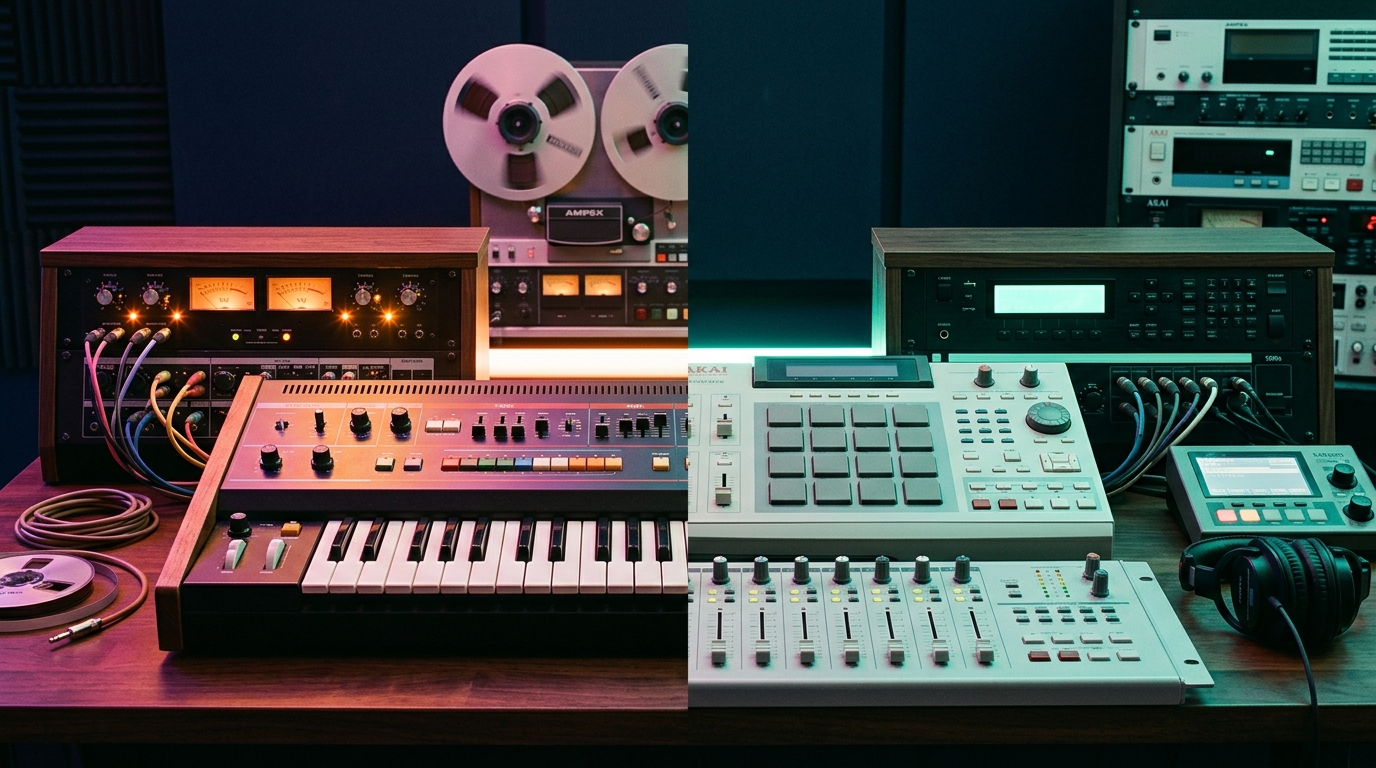
- Serban Ghenea is the ultimate digital purist. Working out of his quiet studio in Virginia Beach, he does not touch an analog mixing desk. He does not use racks of hot vintage tube compressors. He mixes 100% inside Pro Tools with a keyboard, an Apple mouse, and precision plugins. His sound is crystalline, surgical, and hyper-controlled, with zero background hiss and microscopic vocal focus.
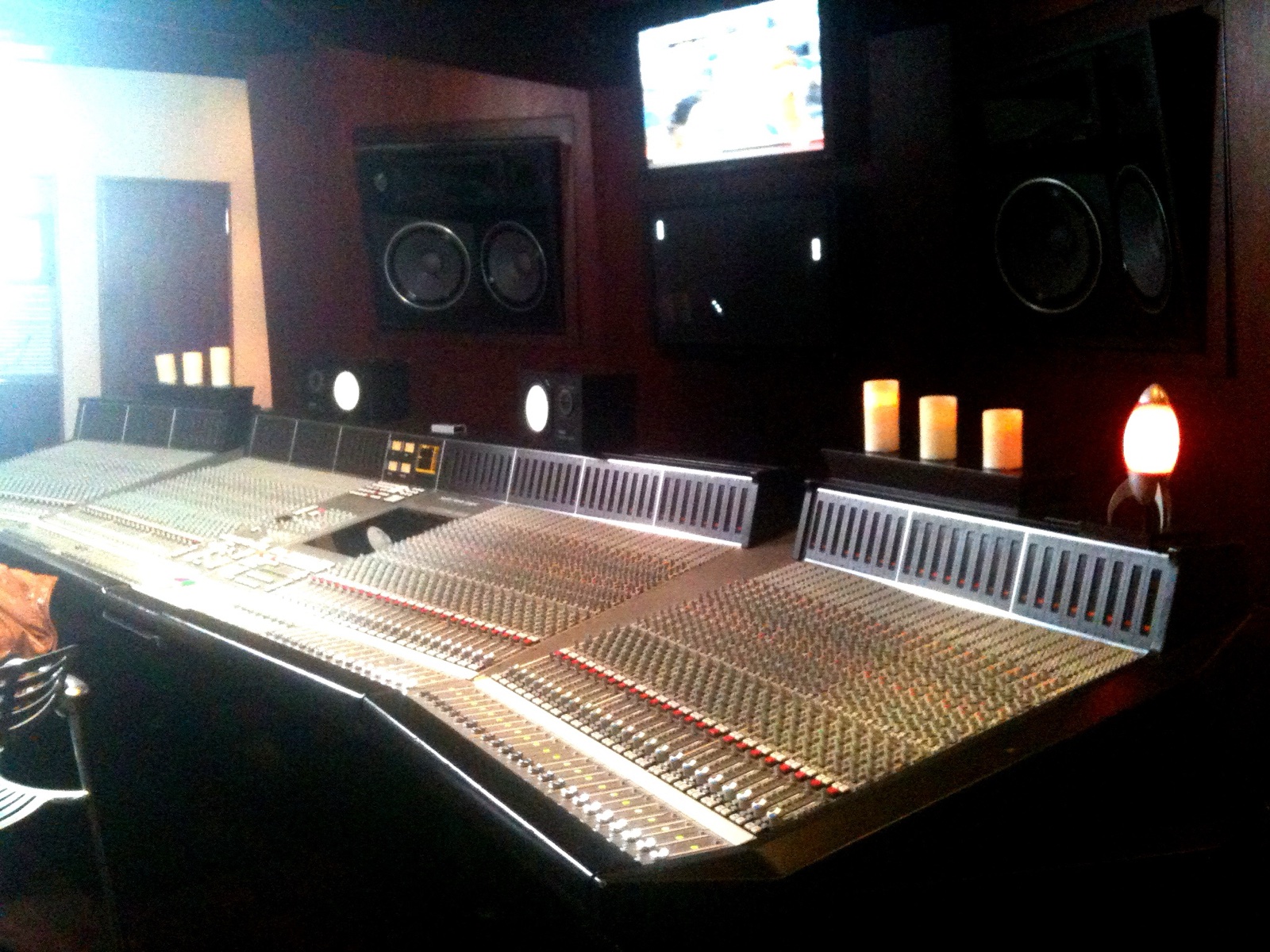
- Chris Lord-Alge is the undisputed king of analog console aggression. Operating out of MIX LA in Burbank, he camps out in front of a roaring 1985 Solid State Logic (SSL) 4000E console patched into Sony 3348 digital tape machines, walls of blue-stripe Urei 1176 limiters, and vintage Pultec coils. His sound is explosive, punchy, and loud, fueled by iron transformers, console crosstalk, and aggressive hardware VCA slam.
This is not a vague debate about "analog warmth versus digital coldness." It is an engineering civil war between two fundamentally different frameworks: mathematical digital precision versus analog harmonic chaos.
This breakdown deconstructs the acoustics, signal chains, frequency curves, and mix mechanics behind both legends, and shows you how to steal the best techniques from both masters inside your DAW.
1. The Architectural Schism: Zero Analog Noise vs. Iron & Voltage
To understand why Serban Ghenea and Chris Lord-Alge sound so radically different, look at the physical physics of where they work.
SERBAN GHENEA (THE 100% IN-THE-BOX SANCTUARY):
Pro Tools 32-Bit Floating Point -> Surgical Dynamic EQ & Phase Alignment -> Microscopic Volume Automation (0.2 dB Precision) -> Crystalline Digital Bounce (-144 dBFS Noise Floor)
result: Pristine transient bite, infinite channel separation, and instant bit-perfect session recall

CHRIS LORD-ALGE (THE BLOWN-OUT VOLTAGE FORTRESS):
Sony 3348 Digital Tape -> 72-Channel Solid State Logic 4000E Console -> Iron Transformer Core Saturation -> Driven SSL G-Master Bus VCA -> Analog Tape Print (-68 dB Thermal Hiss)
result: Explosive harmonic distortion, organic crosstalk glue, and physical mid-forward rock slam
The Serban Philosophy: 100% In-The-Box Discipline
Back in the early 2000s, when big studio engineers laughed at laptops and insisted digital summing sounded "flat and sterile," Serban Ghenea packed up his analog consoles and committed completely to mixing in the box. Along with his longtime mix partner John Hanes, he proved that modern listeners do not miss analog distortion if the digital mix is fast, clean, and musical. As John Hanes shared in his Make Believe Studios interview, their entire system is designed for lightning-fast workflow and zero technical distraction.
Why did Serban ditch the big iron consoles?
- Instant, Bit-Perfect Recall: In modern streaming, labels demand revisions around the clock. When Taylor Swift or Max Martin needs a vocal nudged up by 0.3 dB on the second chorus, Serban does not spend 45 minutes lining up grease pencil marks on 72 faders and re-patching hardware. He opens the session file, bumps the clip gain in two seconds, and bounces a perfect revision.
- The Absolute Zero Noise Floor: When an analog desk runs 64 active channels, every single preamp, channel EQ, and VCA circuit adds thermal component hiss. Sum all 64 channels together, and you get an audible background floor hovering between
-65 dB and -72 dB. In 32-bit floating point inside Pro Tools, the noise floor is mathematically non-existent (-144 dBFS). That silent background lets delicate vocal breaths and sub-bass transients explode out of pitch blackness. - Surgical Transient Attack: Analog tape and transformers act like soft limiters: they round off sharp peaks into harmonic fuzz. In modern pop, hip-hop, and R&B, Serban wants the crack of the snare and the click of the kick drum to slice through the mix with zero smearing. Mixing in the box preserves every microsecond of transient impact.
The CLA Philosophy: The Fixed Analog Template
Chris Lord-Alge takes the exact opposite road. He treats his 72-channel SSL 4000E desk like a 700-horsepower muscle car. He mixes fast, loud, and by physical instinct, as documented in his legendary Sound on Sound: Secrets of the Mix Engineers feature and his classic deep-dive on Pensado's Place #80.
What makes his analog fortress hit so hard?
- The "Fixed Console" Workflow: CLA never starts a mix from scratch. His SSL console is permanently hardwired. Channel 1 and 2 are always Kick and Snare, patched into dedicated vintage Urei 1176 Blue Stripe limiters and Pultec tube equalizers. Vocals always feed his prized black-face 1176 and hardware delays. Because every piece of gear sits permanently in its sweet spot, CLA mixes an entire song in under two hours purely by ear and muscle memory.
- Transformer Iron and Voltage Saturation: CLA deliberately pushes his console channels into the red. When high audio voltages pass through input transformers and line amps, the waveforms do not clip into harsh digital squares. Instead, they gently bend into rich, musical even/odd harmonics. This saturation fattens skinny snare drums, thickens bass guitars, and cements lead vocals right to the front of the speakers.
- Channel Bleed and Acoustic Glue (Crosstalk): Physical desks have a tiny bit of signal leakage between adjacent channels (roughly
-60 dB to -70 dBof crosstalk). Rather than a defect, this subtle bleed acts like acoustic room glue. It naturally knits 48 isolated tracks into one cohesive wall of sound.
2. The Spectrum War: Interactive A|B Curves
Below is the Long-Term Average Spectrum (LTAS) comparison between Serban Ghenea's modern in-the-box pop archetype and Chris Lord-Alge's analog SSL rock archetype, measured across level-matched (-8 LUFS) reference masters.
How to Read This Graph
- The Frequency Spectrum (Left to Right): Shows frequencies from sub-bass (
30 Hz) through punchy low-mids (200 Hz), vocal presence (2 kHz - 4 kHz), up to sparkling air (16 kHz). - The Magnitude Scale (Up and Down): Shows frequency balance relative to a calibrated pink-noise reference target slope.
- Interactive Controls: Toggle between Both (A|B), isolate Serban Only or CLA Only, or switch to Delta (B - A) to see the exact frequency difference. Click any numbered pin on the graph to jump directly to its breakdown.
3. The Arsenal Matrix: Digital DAW Rig vs. SSL Console Monster
The gear on their desks reveals the core of their engineering styles. Here is how their signal chains match up across every critical stage of mixing.
| Signal Chain Element | Serban Ghenea (100% In-The-Box) | Chris Lord-Alge (Analog SSL 4000E) | The Engineering Difference |
|---|---|---|---|
| Summing Engine | Pro Tools 32-bit Floating Point DSP | Solid State Logic 4000E 72-channel desk | Serban gets infinite internal headroom with zero crosstalk; CLA gets console transformer saturation and organic channel bleed. |
| Mix Bus Compression | Digital precision limiters / transparent VCA plugins | SSL G-Master Bus Compressor (4:1 ratio, 30ms attack, Auto release) | Serban preserves micro-dynamics and transients; CLA glues the entire mix together with aggressive VCA pump. |
| Lead Vocal Compression | Multi-stage digital control (Metric Halo ChannelStrip, FabFilter Pro-C 2) | Vintage Urei 1176LN Blue Stripe (4:1 or 8:1, fast attack/fast release) | Serban keeps vocals ultra-clean and intimate; CLA slams the 1176 for gritty analog distortion and immediate presence. |
| Vocal EQ & De-Essing | FabFilter Pro-Q 3 (dynamic notches) + Weiss Deess | SSL Black-Knob Channel EQ + hardware Pultec EQP-1A | Serban surgically removes problem frequencies; CLA broadly boosts 8 kHz top-end and scoops 400 Hz boxiness with analog inductors. |
| Snare Processing | Transparent transient shaping & surgical linear-phase gating | SSL Channel Compressor (fast attack) + Pultec 100 Hz boost | Serban keeps drum crack focused and clean; CLA creates an explosive, thick snare crack that cuts through walls of guitars. |
| Spatial Effects (Reverb) | Algorithmic plugins (Lexicon emulations, Eventide Blackhole, Valhalla) | Vintage Lexicon 480L, AMS RMX16, and EMT 140 plate reverb | Serban blends reverbs with sidechained ducking; CLA prints wide, static stereo hardware spaces that create instant depth. |
| Low-End Control | Surgical dynamic EQ + FabFilter Pro-MB sub clamping | Pultec tube low-frequency boost/attenuate trick at 60 Hz | Serban allows 808s to shake down to 30 Hz; CLA tightens bass guitar and kick drum into an unshakeable 70 Hz to 100 Hz fist. |
| Recall Speed | 4 seconds (Session open / instant bounce) | 45 minutes to 1 hour (Hand-drawn recall sheets & grease pencils) | Serban can make 10 client revisions in an hour; CLA commits to bold, unchangeable decisions in the initial print. |
4. The Studio Showdowns: 6 Benchmark Records
To hear how these two mixing titans shape sound, let us place their benchmark mixes into three head-to-head showdowns. Level-match your monitors and use the timestamped listening cues to catch the architectural differences.
Showdown 1: The Drum Transient Slam (Dua Lipa vs. Paramore)
Punch, Low-End Dynamics, and Transient Precision
Notice how Serban achieves bass depth through laser-focused sidechain pocketing, while CLA achieves power through driven SSL console channels and explosive room compression.

A masterclass in modern pop separation. As producer Ian Kirkpatrick broke down in his famous YouTube studio walkthrough, Serban carves out dedicated frequency pockets for every single instrument. The kick drum has a tight transient click at 3.5 kHz and pure weight at 55 Hz, leaving the 100 Hz to 250 Hz zone completely open for the walking disco bass. The mix feels wide, high-resolution, and unencumbered by analog saturation.
- 0:14 When the nu-disco bassline drops, listen to the total isolation between the 50 Hz kick drum sub and the bass guitar harmonics. Zero mud, zero masking, and surgical sidechain clearance.
- 0:45 Chorus explosion: despite dozens of synth layers and percussion loops entering, Dua Lipa's vocal sits exactly 1.5 dB above the music without harshness or sibilant spitting.
- 2:15 Breakdown drop: listen to the ultra-clean transient crack of the snare. There is zero analog tape hiss during the silent pauses between drum hits.
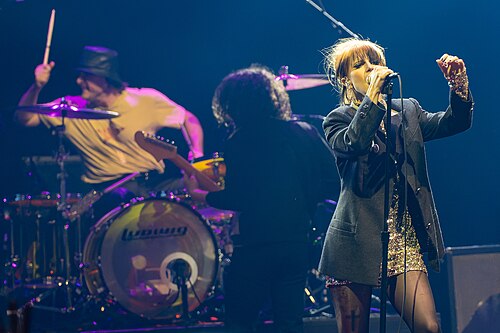
The definitive 2000s rock mix. Tracking producer David Bendeth delivered dense, fiery multitracks, and CLA did not apologize for aggressive volume. He drives the SSL console channels hot, letting analog transformers round off the initial drum transients into thick, explosive weight. The rhythm guitars chew through the stereo field with aggressive 3 kHz presence, while the snare drum punches like a cannon.
- 0:08 The full band kicks in. Listen to the snare drum: it sounds twice as large as real life. CLA slams the SSL channel compressor to draw out the ring of the drum head.
- 0:42 Pre-chorus build: listen to the wall of distorted rhythm guitars. They are spread hard left and hard right, glued together by the SSL master bus compressor pumping against the cymbals.
- 1:00 Chorus drop: Hayley Williams' vocal punches directly through four layers of high-gain guitars. That forward bite is pure 1176 all-buttons-in harmonic distortion.
Showdown 2: The Vocal Presence Deathmatch (The Weeknd vs. Green Day)
Vocal Treatment, High-End Texture, and Sibilance Management
Hear how Serban sculpts vocal air with microscopic dynamic resonance carving, while CLA achieves vocal immortality through driven analog FET limiters and vintage Pultec coils.
The biggest streaming single in history, mixed entirely in the box. Producer Max Martin crafted dense, buzzy analog synthesizer arrangements, and Serban keeps the lead vocal intimate and effortless on top. His use of multi-stage digital de-essing and transparent peak control allows The Weeknd's vocal to stay silky smooth at blistering streaming loudness.
- 0:25 Abel's vocal enters over the driving synth bass. Notice how the vocal is completely dry, bright, and upfront, yet contains zero ear-piercing sibilance on 's' and 't' sounds.
- 0:50 Main hook: massive 80s-inspired Roland Juno synth leads play full chords, yet never mask the lead vocal. Serban carves dynamic notches into the synths exactly where the vocal sings.
- 1:40 Listen to the high-frequency air around 14 kHz. It sparkles with modern digital clarity, without the tape hiss or high-frequency flutter of vintage analog decks.

Grammy Record of the Year winner for 2006. Produced by Rob Cavallo and Green Day, CLA demonstrated his signature vocal trick (which he breaks down in his Mix with the Masters session): driving the vocal through a vintage 1176 with 10 dB to 15 dB of gain reduction, pinning the meter needle to the far right. This locks the vocal to the center of the speakers, making it urgent and impossible to ignore.
- 0:00 Iconic tremolo acoustic guitar: notice the thick, warm 200 Hz body. It sounds rich and earthy through the SSL channel preamps.
- 0:16 Billie Joe Armstrong's vocal enters. The vocal is pushed hard against an 1176 limiter. You can hear the breath and the gritty grit of the preamp transformer saturating on louder words.
- 2:12 Huge chorus transition: acoustic guitars instantly give way to massive distorted Marshall stacks. The mix bus compressor grips the track and pulls the drums right into the guitar wall.
Showdown 3: The Bus Density Collision (Taylor Swift vs. Muse)
Master Bus Dynamics, Spatial Separation, and Summing
Discover how Serban achieves transparency across 80+ layered tracks, while CLA handles massive, multi-layered arrangements using console crosstalk and analog summing glue.
Modern pop perfection. Serban balances Jack Antonoff's dense, retro synthesizer arrangements with Taylor Swift's conversational vocal delivery. Every vocal double is microscopically automated in volume so that consonants align cleanly without comb filtering. The digital summing engine keeps every layer occupying its own 3D coordinate.
- 0:00 Listen to the vintage LinnDrum kick and snare loop. Serban preserves every micro-dynamic nuance. The kick is punchy but polite, leaving massive headroom for the sub synth.
- 0:45 Chorus: Taylor's famous 'It's me, hi / I'm the problem, it's me' vocal line is surrounded by pitched-down vocal doubles and synth pads. Notice how every word remains pristine and crystal-clear.
- 2:10 Bridge section: delicate acoustic guitar strums and vocal harmonies enter. Because the mix has zero analog noise, the background is pitch-black silence.

The official song of the London 2012 Olympic Games, mixed by CLA at MIX LA. Where lesser mixers would drown under the sheer weight of a 50-person choir, pounding rock drums, and Matt Bellamy's operatic vocals, CLA uses the punch of his SSL desk to hammer every transient into place. The mix breathes with the tempo of the song because the entire track pushes into the analog mix bus compressor together.
- 0:00 Dramatic church organ and rising choir set a massive 3D stereo stage. CLA spreads the choir wide across the stereo field using analog console panning.
- 1:15 The full rhythm section and stadium choir slam into CLA's SSL bus compressor together. Notice how the drums push the choir back slightly on every beat, creating explosive analog pump.
- 3:02 Matt Bellamy's screaming guitar solo tears through the mix with unmistakable 1176 Blue Stripe harmonic bite, cutting cleanly above the massive orchestral backing.
5. Producer Playbook: Recreating Both Eras
You do not need a million-dollar SSL desk or a proprietary Pro Tools rig to capture these sonic signatures. Here are five practical DAW recipes to recreate the best elements of both masters in your own projects.
Theme 1: Surgical Low-End Pocketing vs. Console Sub Drive
SERBAN ITB METHOD (SURGICAL POCKETING):
Sub Kick (50 Hz Sine) -> FabFilter Pro-Q 3 Dynamic Dip (cuts bass at 50 Hz only when kick hits) -> High-Pass Bass at 42 Hz -> Masking-Free Low End
result: Precision 50 Hz sub pocket where kick transients never fight bassline weight

CLA ANALOG METHOD (CONSOLE SUB DRIVE):
Kick & Bass Combined Bus -> Pultec EQP-1A Trick (Boost & Cut 60 Hz simultaneously) -> SSL Master Bus VCA Compressor (4:1 Ratio) -> Thick Analog Low-End Glue
result: Heavy transformer warmth and shared VCA gain reduction that fuses kick and bass together
The Serban Recipe (Pristine Pop Low End)
- Crown One Sub King: Decide whether your kick drum or sub-bass owns the
35 Hz - 55 Hzzone. In modern pop, the kick usually hits at50 Hz, while the bass sits right above it at70 Hz - 140 Hz. - Apply Dynamic Sidechain Notching: Put a transparent parametric EQ (such as FabFilter Pro-Q 3 or your DAW's native dynamic EQ) on the bass track. Set a dynamic bell filter at
50 Hz(Q = 3.0), sidechained to the kick drum. Every time the kick strikes, the bass ducks by-4 dBonly at that exact frequency, leaving the upper harmonics of the bass untouched. - High-Pass the Side Channel: Put an EQ on your master stereo bus or bass bus in Mid/Side mode. Engage a steep high-pass filter (24 dB/octave) on the Side channel at
100 Hz. All frequencies below 100 Hz are now dead-mono, maximizing headroom for streaming converters.
The CLA Recipe (Explosive Rock Low End)
- The Pultec Low-End Trick: Put a Pultec EQ emulation (Waves PuigTec, UAD Pultec, or Slate FG-108) on your kick drum and bass tracks. Set the frequency knob to
60 Hz. - Simultaneous Boost and Attenuate: Turn the Boost knob to
5and the Atten knob to4. Because the boost and attenuate curves have slightly different filter shapes and cutoff slopes, this creates a tight sub boost at 60 Hz paired with a smooth scoop around250 Hz - 300 Hz, instantly removing boxy mud while adding physical chest thump. - Drive the Line Amp: Increase the input gain into your console channel strip emulation until you hear subtle saturation on the peaks. The analog transformer model will round off harsh sub spikes into musical warmth.
Theme 2: Dynamic Resonance Notching vs. 1176 Blue Stripe Grunt
SERBAN VOCAL CHAIN (SURGICAL POP AIR):
Vocal Track -> Oeksound Soothe2 Dynamic De-Resonator -> Transparent VCA Compressor (2 dB Gain Reduction) -> Pure Top Air Shelf (+3 dB at 16 kHz)
result: Crystalline vocal sheen without harsh sibilance or heavy pumping artifacts

CLA VOCAL CHAIN (AGGRESSIVE 1176 SLAM):
Vocal Track -> 1176 Blue Stripe (4:1, Attack 3, Release 7, 10 dB GR) -> SSL 8 kHz Top Shelf Boost -> Driven Console Channel Strip
result: Blown-out forward presence that slices through dense rock guitars and synthesizers
The Serban Recipe (Ultra-Clean Modern Pop Vocal)
- Clean Up First, Compress Later: Before applying heavy compression, insert a dynamic resonance suppressor (or a narrow parametric EQ) to remove piercing room resonances between
2.5 kHz and 4.5 kHz. If you compress before notching, the compressor will clamp down on the resonant spikes and muddy the vocal. - Multi-Stage Transparent Compression: Do not ask one compressor to do 10 dB of work. Use two compressors in series doing
-2 dB to -3 dBeach. Use a fast digital compressor first to catch rogue peak syllables, followed by a smooth opto compressor for gentle body leveling. - Crystalline Air Shelf: Apply a gentle high-shelf boost (+2 dB) starting at
14 kHz. In the digital domain, this adds luxurious, expensive-sounding sheen without adding harshness or sibilance.
The CLA Recipe (Aggressive "In-Your-Face" Vocal)
- The 1176 Blue Stripe Slam: Load an 1176 Blue Stripe emulation (such as CLA-76 Bluey, UAD 1176LN Rev A, or Arturia Comp FET-76). Set the ratio to
4:1(or8:1for screaming rock vocals). - Fastest Settings: Set the Attack control to
3(medium-fast) and the Release control to7(lightning-fast, which is fully clockwise on an 1176). - Pin the Meter: Drive the input knob until the needle is consistently pulling down
-7 dB to -12 dBon every phrase. The fast release creates micro-harmonic distortion that pushes the vocal right against the speaker cone. - Aggressive High-Frequency Boost: On an SSL channel strip plugin, boost the high-frequency shelf knob (+4 dB to +6 dB) at
8 kHz. Don't be timid: the 1176 will absorb the boost and convert it into biting presence that cuts through heavy guitars and dense synthesizers.
Theme 3: Micro-Automation Transparency vs. Master Bus VCA Glue
SERBAN DYNAMICS (MICROSCOPIC VOLUME AUTOMATION):
Vocal Track -> Automated Clip Gain & Fader Rides (0.2 to 0.5 dB Precision) -> Transparent Master Limiter (-1 dB Max Gain Reduction) -> Uncompromised Headroom
result: Pinned, consistent vocal intimacy across the entire arrangement without suffocating compressor choke

CLA DYNAMICS (THE SSL BUS COMPRESSOR GLUE):
All 48 Console Channels -> SSL G-Master Bus Compressor (4:1, 30ms Attack, Auto Release) -> Needle Dancing 2-4 dB in Tempo -> Cohesive Mix Glue
result: Breathes in rhythm with the arrangement, knitting rhythm section and guitars into a single punch
The Serban Recipe (Micro-Gain Automation)
- Ride Faders Before Limiters: Serban is famous for spending hours automating individual syllables, vocal breath levels, and synth transitions. Use your DAW's clip gain or volume automation lane to raise quiet words by
+0.5 dB to +1.5 dBand lower loud consonants by-1.0 dB. - Preserve Master Bus Headroom: Do not let a master bus compressor do the heavy lifting. Serban's mixes have high crest factors because the balance is engineered with fader moves rather than aggressive limiter clamping. Learn more in our guide on what headroom really means in digital audio.
- Transparent True-Peak Limiting: On your master bus, use a modern digital limiter set to a ceiling of
-0.5 dBFSor-1.0 dBFS. Aim for no more than-1.5 dBof total limiter gain reduction. If you need more loudness, clip the snare and kick drums individually earlier in the chain.
The CLA Recipe (The SSL Master Bus Pump)
- Mix Into the Compressor Early: Do not slap the mix bus compressor on at the very end of your session. CLA engages his SSL master bus compressor from minute one of the mix and balances all his tracks into it.
- The Classic Settings:
- Ratio:
4:1 - Attack:
30 ms(Allows the initial transient punch of the kick and snare to pass through before compression starts) - Release:
Auto(Or0.1sfor fast, energetic rock)
- Ratio:
- The 2 dB Dance: Adjust your threshold until the needle bounces gently between
-2 dB and -4 dBof gain reduction on the loudest downbeats. The compressor should breathe in rhythm with the tempo of the song, creating the famous "SSL glue" that ties the drums, bass, and guitars into one unit.
Theme 4: Digital Stereo Imaging vs. Analog Crosstalk Bloom
SERBAN STEREO (HAAS MICRO-PITCH & PHASE COHERENCE):
Stereo Vocal Double -> Eventide MicroPitch (+7 Cents Left / -7 Cents Right @ 10ms Delay) -> Stereo Width Bus -> Zero Mono Phase Cancellation
result: Ultra-wide pop vocal spread that collapses cleanly to mono with zero comb filtering

CLA STEREO (CONSOLE CROSSTALK & EMT 140 PLATE):
Stereo Drum Overhead -> SSL Channel Crosstalk (-60 dB L/R Bleed) -> EMT 140 Hardware Plate Reverb -> Wide Analog Stereo Field
result: Organic acoustic dimension and warm stereo bleed that softens artificial pan positions
The Serban Recipe (Wide, Clean, Phase-Aligned Stereo)
- Micro-Pitch Shifting: Instead of using wide, chorused reverb that muddies the stereo image, use micro-pitch widening on lead vocal doubles and synth hooks. Set the left channel to
-6 to -8 centsand the right channel to+6 to +8 cents, with a microscopic8 ms to 12 msdelay offset. - Sidechannel Carving: On reverb return aux tracks, insert an EQ and cut
-3 dBwith a broad bell at500 Hzand high-pass at200 Hz. This creates a shimmering, wrap-around spatial sensation that keeps the center vocal pocket crystal-clear. - Mono Compatibility Check: Always check your mix in mono. Because Serban avoids phase-smearing analog delays, his vocal levels never collapse or disappear when played back on a single smartphone speaker or mono Bluetooth speaker.
The CLA Recipe (Organic Console Spread & Room Dimension)
- Emulate Analog Crosstalk: Many modern SSL console plugins (like Brainworx bx_console SSL 4000E or Waves CLA MixHub) include an analog crosstalk knob. Engage it at
-65 dB. This allows subtle, authentic channel bleed between left and right channels, softening artificial digital pan points. - Hard-Pan Decisions: CLA does not pan instruments to 15% or 30%. His panning rules are simple: Left, Center, or Right (L-C-R). Rhythm guitars are 100% Left and 100% Right. Bass, kick, snare, and lead vocals are 100% Center. Secondary elements (percussion, backing vocals) are panned hard to the rails, creating a massive, wide stereo stage with an uncluttered middle.
- The Drum Room Squash: Send your stereo drum room microphones to an auxiliary bus. Insert an 1176 in All-Buttons-In mode (British mode: press 4, 8, 12, and 20 simultaneously). Crank the input until the meter is completely buried. Blend this smashed room track in underneath your clean drum bus at
-12 dBto create natural acoustic depth.
Theme 5: The Headroom Philosophy (Floating Point vs. Analog Saturation Ceiling)
SERBAN HEADROOM (32-BIT FLOAT DISCIPLINE):
Individual Audio Tracks (-18 dBFS Nominal RMS) -> Gain-Staged Processing Plugins -> Pre-Master Bus (-6 dBFS Peak Ceiling) -> True-Peak Protected Master
result: Pristine digital summing with zero inter-plugin clipping or converter distortion

CLA HEADROOM (DRIVING THE VCA VOLTAGE):
SSL Channel Input Driven +4 dBu -> Transformers Saturate Transient Peaks -> Pushed Analog Ceiling (+24 dBu Clip) -> Effortless Analog Limiting
result: Magnetic core saturation that chops off transient spikes into warm harmonic overtone energy
Serban's 32-Bit Float Discipline
- Gain Staging is Paramount: Just because digital DAWs have 32-bit floating point processing does not mean you should slam tracks into the red. Keep your individual channel peaks peaking around
-12 dBFS to -8 dBFSand averaging-18 dBFS RMS. - Clean Summing: This ensures that your third-party plugins (especially those modeling non-linear analog gear) operate within their optimal mathematical linear zones, preventing unintended digital intermodulation distortion.
CLA's Analog Voltage Saturation
- Transformers as Soft Limiters: On an SSL desk, pushing a track hot does not cause catastrophic digital square-wave clipping; it causes transformer core saturation. The transformers physically cannot transfer excessive voltage, so they compress the transient peaks smoothly.
- Console Sweet Spot: CLA pushes kick and snare channels until the SSL VU meters are pinned against the glass. The result is instant, effortless analog limiting that lops off 3 dB to 5 dB of transient spikes before the audio ever reaches a mastering converter.
6. The Mixer Cheat Sheet: Serban Rules vs. CLA Rules
Print this out or bookmark it next to your DAW. When you are stuck on a mix, ask yourself which philosophy solves the problem faster.
| The Mixing Dilemma | The Serban Ghenea Move (Digital Precision) | The Chris Lord-Alge Move (Analog Attitude) |
|---|---|---|
| Vocal is getting buried | Automate volume up +0.5 dB; dynamically dip 1.5 kHz on competing synths/guitars. | Crank 1176 Blue Stripe input; boost 8 kHz high shelf on SSL channel EQ. |
| Kick and 808 are fighting | Sidechain dynamic EQ notch at 50 Hz on the bass, ducking only on kick hits. | Pultec trick: Boost & cut 60 Hz simultaneously; high-pass console channel at 40 Hz. |
| Snare lacks impact | Transient shaper to boost initial click; gate out all spill to leave pure silence. | Slam SSL channel compressor; blend in an 1176 All-Buttons-In parallel room smash. |
| Mix sounds boxy / muddy | Surgical parametric dip (-3 dB) between 220 Hz and 350 Hz on individual tracks. | Broad Pultec cut at 300 Hz on the master bus; boost 100 Hz and 10 kHz simultaneously. |
| High end sounds harsh | Multi-band dynamic resonance suppression (Soothe2) + Weiss digital de-essing. | Roll off top end with analog tape emulation; let transformer saturation soften the 6 kHz bite. |
| Stereo field is cluttered | Micro-pitch shift backing vocals (+/-7 cents); high-pass reverb returns at 250 Hz. | Hard L-C-R panning: guitars 100% wide, lead vocals and rhythm section dead-center. |
| Mix lacks glue | Leave master bus open; let mastering engineer handle final multi-band compression. | Mix directly into an SSL G-Master Bus compressor (4:1 ratio, 30ms attack, Auto release). |
| Client asks for 5 revisions | Open session in 4 seconds; tweak clip gain by 0.3 dB; bounce immediately. | Commit to your artistic vision on the board; force the client to trust the analog print. |
7. The Modern Hybrid: Blending In-The-Box Rigor with Console Punch
In 2026, top producers and mix engineers no longer pick between Serban and CLA. They use the Modern Hybrid Formula: combining Serban's surgical digital discipline with CLA's analog harmonic attitude.
THE 2026 SERBAN-CLA HYBRID POP/ROCK PIPELINE:
Phase 1: Serban Surgical Prep (Dynamic EQ, pitch correction & clean de-essing) -> Phase 2: CLA Harmonic Color (SSL channel strips, driven tube saturation & parallel 1176 slam) -> Phase 3: Serban Precision Dynamics (Word-by-word fader automation & sidechain-ducked reverb) -> Phase 4: Modern Peak Control (Dedicated soft clipper at -0.5 dBFS before transparent true-peak limiter)
result: Blends Serban crystalline pop high-end transparency with CLA physical transformer punch at competitive streaming loudness
The 4-Step Hybrid Signal Flow
1. Serban Prep: Clean Up the Raw Audio First
Before any color or saturation plugins touch your tracks, apply Serban-style digital hygiene.
- Use a linear-phase EQ to high-pass unwanted rumble below
30 Hz. - Use dynamic resonance suppression to notch out unpleasant room rings, nasal vocal boxiness, or squeaking guitar frets.
- Align your vocal doubles with surgical timing correction.
- Never run dirty, resonant audio into analog saturation plugins; the saturation will only amplify the flaws.
2. CLA Color: Inject Analog Attitude onto Parallel Busses
Once the raw audio is clean, inject CLA's harmonic aggression using console and hardware emulations on dedicated auxiliary busses:
- The CLA Drum Parallel: Send your kick, snare, and toms to a parallel aux bus loaded with an 1176 in All-Buttons-In mode. Smash the transient peaks by
-12 dB, then blend this aux channel in at-14 dBunderneath your clean drum tracks. You get the explosive weight of analog console compression without losing the sharp digital attack of the clean drums. - The SSL Bus Glue: Place an SSL master bus compressor plugin across your mix bus early in the production process. Let the needle gently bounce
-1 dB to -2 dBon the heavy beats to knit the arrangement together.
3. Serban Micro-Control: Faders Over Compressors
Instead of letting your master bus compressor choke your mix to control vocal volume, take 20 minutes to automate the lead vocal fader. Ride the fader up on quiet words and pull it back on loud syllables. When your vocal level is consistently balanced before hitting the bus compressor, the compressor behaves smoothly, and your mix retains massive dynamic punch.
4. The 2026 Loudness Solution: Soft Clipping Before Limiting
How do modern engineers achieve the competitive -6 to -8 LUFS loudness of a CLA rock mix while keeping the crystalline transparency of a Serban pop record?
- Place a dedicated soft clipper like AuxClip Pro on your drum bus and pre-master bus.
- Shave off
1 dB to 2 dBof transient peaks from the kick and snare drums before they hit your master limiter. - Because soft clipping rounds off fast micro-transient spikes without triggering audible pumping, your master limiter does not have to work overtime. Check out our full guide on why you must clip drums before your master limiter. You get Serban's pristine digital high-end sparkle, CLA's physical snare punch, and modern competitive streaming loudness without distortion.