
Drop a 1994 New York boom-bap anthem and a 2018 Atlanta trap banger into your DAW, level-match their meters, and you will witness the most radical structural shift in hip-hop history.
A 1990s boom-bap mix feels like a heavyweight boxer landing body blows in a smoky concrete basement. The kick drum thuds with the physical punch of a wooden beater against a 22-inch acoustic bass drum head. The snare cracks through a layer of dusty vinyl crackle and 12-bit grit. The groove breathes with unquantized swing, and the entire frequency spectrum clusters around a warm, muscular midrange that frames the MC's voice like a spotlight.
A 2010s trap mix feels like standing directly in front of an earthquake generator at an arena festival. The kick is a razor-sharp transient click that hits for five milliseconds and vanishes, clearing the deck for a massive, tuned Roland TR-808 sine wave that rattles subwoofers down to 32 Hz. The hi-hats dart across the stereo field in 1/64th-note triplet bursts, sizzling with ultra-bright digital air, while the entire master bus is pushed against hard soft clippers for maximum commercial loudness.
How did hip-hop transform from warm, sampled jazz breakbeats into cold, synthesized, sub-harmonic trap warfare? It was not just a shift in lyricism. It was a complete revolution in sampling physics, conversion bit-depth, and low-end engineering.
This breakdown deconstructs the acoustics, hardware signal chains, spectral curves, and mix mechanics behind both eras, featuring icons like Nas and Travis Scott, and gives you actionable DAW recipes to recreate both sonic signatures today.
1. The Mechanical Schism: 12-Bit Vinyl Chops vs. Floating-Point 808 Glides
To understand why 90s boom-bap and 2010s trap sound like they were recorded on different planets, look at the physical limitations of the machines that birthed them.
1990S BOOM-BAP (THE VINYL EXTRACTION ENGINE):
Turntable Vinyl Record (33/45 RPM) -> E-mu SP-1200 / Akai MPC60 (12-bit, 26.04 kHz) -> Analog Mixing Console -> 1/2-Inch Master Tape Print
result: Aggressive 12-bit quantization crunch, pitched-down aliasing ring, and 45 Hz vinyl high-pass punch

2010S TRAP (THE FLOATING-POINT SUB GENERATOR):
DAW Audio Engine (32-bit Float) -> Tuned Roland TR-808 Sine Generator -> Two-Octave Pitch Glide Automation -> Hard Digital Soft-Clipper
result: Deep 30 Hz sub-bass reach, separated 3 kHz click transient, and clipped harmonic overtones
The Boom-Bap Machine: Squeezing Seconds from Silicon
In the golden era of New York hip-hop, producers did not have hard drives, unlimited RAM, or spectral editors. They worked with severe hardware restrictions that shaped the musical sound:
- The 2.5-Second Sample Memory Crunch: The legendary E-mu SP-1200, released in 1987, had a total sampling time of only 2.5 seconds. To sample a two-bar soul loop, producers like DJ Premier and Pete Rock played their 33 RPM vinyl records at 45 RPM into the sampler, speeding up the audio to fit inside the tiny memory. Once inside the SP-1200, they pitched the sample back down. This crude sample-rate reduction produced a distinct ringing metallic overtone known as aliasing and ring modulation.
- The 12-Bit Acoustic Punch: The SP-1200 and the original Akai MPC60 operated at 12-bit resolution with a 26.04 kHz sampling rate. In digital signal processing, 12-bit conversion yields a dynamic range of only 72 dB (compared to 144 dB in standard 24-bit audio). This forced quantization noise acts like a built-in compressor and exciter, adding aggressive crunch to acoustic snare drums and kicking the midrange right into your face.
- The Vinyl High-Pass Mandate: 90s boom-bap was mixed with vinyl pressing in mind. Cutting engineers had to preserve physical groove real estate. Frequencies below 40 Hz take up massive horizontal space on a vinyl disc; excessive out-of-phase sub-bass would cause the turntable stylus to physically leap out of the groove. Engineers routinely filtered out everything below 45 Hz, concentrating the entire low end into the chest-thumping 70 Hz to 100 Hz zone.
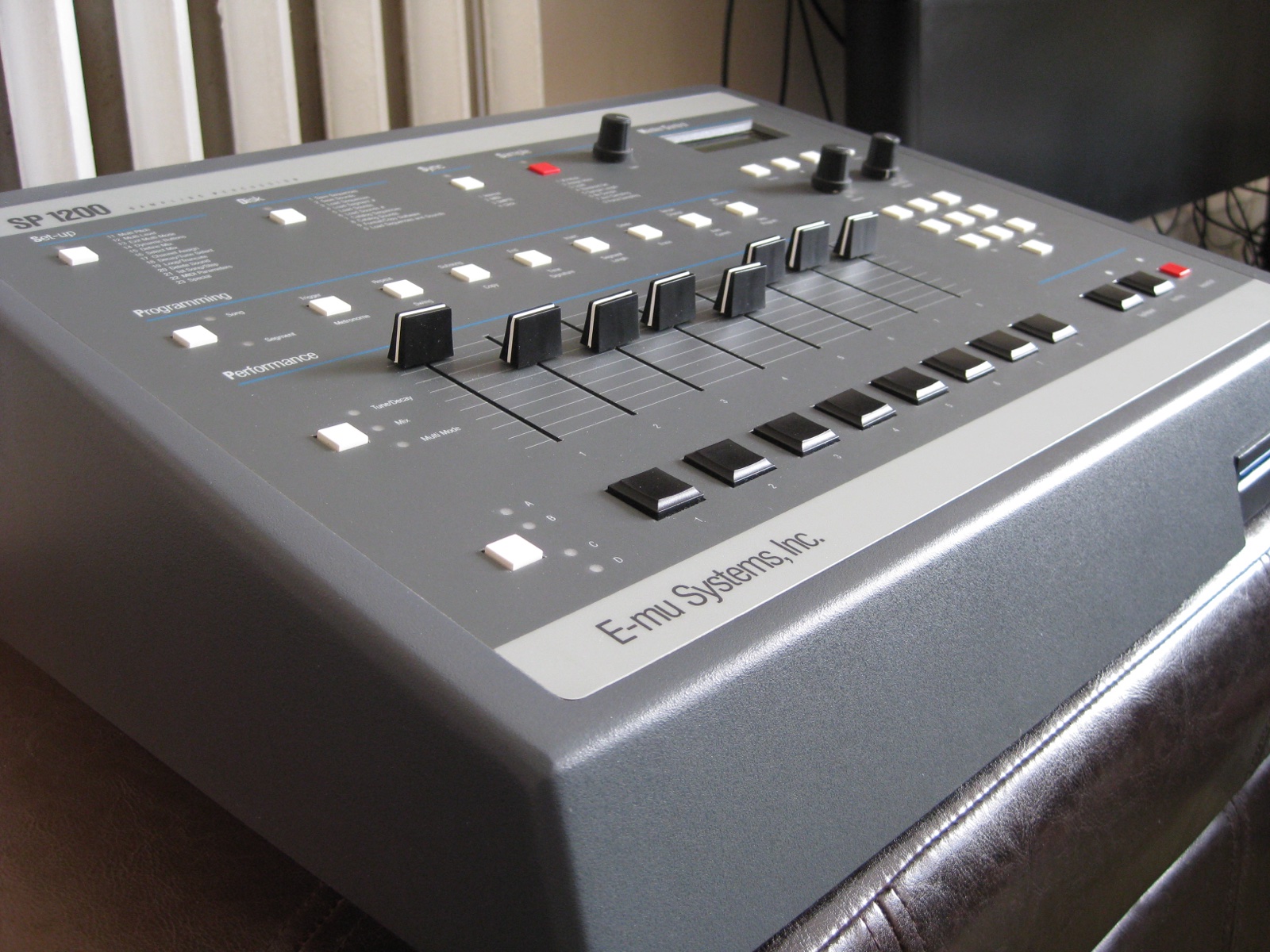
The Trap Machine: The Digital Subwoofer Takeover
By the 2010s, hip-hop production moved entirely inside the laptop. Producers in Atlanta and Chicago working on FL Studio had access to 32-bit floating-point audio engines, infinite audio tracks, and subwoofers engineered for heavy motor vehicle sound systems:
- The Evolution of the Roland TR-808: The 808 was originally an analog drum machine released in 1980 whose bass drum was generated by a bridged T-network resonant filter simulating a kicked kick drum. In the 2010s, trap producers ripped the 808 sample, loaded it into virtual samplers, tuned it to the song's key, and used pitch-envelope automation to create soaring slides and glides across two octaves.
- Separation of Click and Sub: Boom-bap used one acoustic kick sample that provided both attack click and low body simultaneously. Trap severed this connection into two specialized instruments:
- A microscopic, dry top-kick transient (lasting only 5 ms to 10 ms) that clicks at 3 kHz to pierce through small phone speakers.
- A massive, sustained 808 sub sine wave that glides underneath between 30 Hz and 60 Hz.
- The Soft-Clipper Aesthetic: Trap producers realized that running a sub-bass into a standard brickwall limiter caused catastrophic audio pumping, dragging the vocals down on every bass hit. By running individual tracks into a hard digital clipper (such as Fruity Soft Clipper or dedicated plugins like AuxClip Pro), they chopped off the crest factor peaks cleanly, creating upper harmonic overtones that allow massive 808s to translate clearly onto laptop speakers without pumping the mix.
2. The Spectrum War: Interactive A|B Curves
Below is the Long-Term Average Spectrum (LTAS) comparison between 1990s Boom-Bap and 2010s Trap, measured across level-matched commercial reference masters relative to a standard calibrated pink-noise target slope.
How to Read This Graph
- The Frequency Spectrum (Left to Right): Shows frequencies from earthquake sub-bass (
30 Hz) through punchy low-mids (200 Hz), vocal presence (2 kHz - 4 kHz), up to high-frequency air (16 kHz). - The Magnitude Scale (Up and Down): Shows frequency balance relative to a calibrated pink-noise reference target slope.
- Interactive Controls: Toggle between Both (A|B), isolate Boom-Bap Only or Trap Only, or switch to Delta (B - A) to see the exact EQ difference. Click any numbered pin on the graph to jump directly to its breakdown.
3. The Arsenal Matrix: Vintage Sampler Rig vs. Modern Trap DAW Factory
The tools in the studio dictate every creative and technical decision. Here is how the signal chains compare across every critical element of production.
| Production Element | 1990s Boom-Bap (Hardware Sampler Rig) | 2010s Trap (Modern In-The-Box DAW) | The Engineering Difference |
|---|---|---|---|
| Core Sampler / Sequencer | E-mu SP-1200 / Akai MPC60 / Ensoniq ASR-10 | FL Studio, Ableton Live, Logic Pro (32-bit floating point) | Boom-bap relied on 12-bit hardware DAC converters and hardware swing timing; trap relies on infinite digital tracks, sample-rate precision, and MIDI piano roll automation. |
| Low-End Architecture | Sampled acoustic bass guitar / filtered vinyl sample chops | Synthesized Roland TR-808 sine wave tuned to musical key | Boom-bap low end is warm, dynamic, and sits at 70 Hz to 120 Hz; trap low end is continuous sub energy rumbling between 30 Hz and 55 Hz. |
| Kick Drum Treatment | Acoustic live drum break chops (Skull Snaps, Amen, Impeach) | Short 5ms acoustic/synthetic transient click sidechained or layered over 808 | Boom-bap kick carries heavy low-mid body and room air; trap kick is a high-frequency transient spike designed strictly to trigger the compressor/clipper. |
| Hi-Hat Articulation | Sampled acoustic ride/hat with human MPC swing (54% - 62%) | Synthesized closed 808 hat programmed in 1/32nd and 1/64th triplet rolls | Boom-bap hi-hats push and pull against the beat; trap hi-hats create mechanical, high-velocity rhythmic stutter and pitch automation. |
| Snare & Clap Mechanics | Smashed 12-bit acoustic snare layered with vinyl noise | Sharp synthetic 808 clap or layered rimshot soft-clipped to 0 dBFS | Boom-bap snares carry natural room decay; trap claps are laser-focused, razor-thin, and clip transient peaks aggressively. |
| Vocal Mix Chain | Shure SM7B or Neumann U87 into Neve preamp and Urei 1176 | Sony C800G into Avalon 737, multi-stage Auto-Tune, and high-shelf air | Boom-bap vocals are dry, centered, and gritty with heavy low-mid authority; trap vocals are pitch-corrected, heavily de-essed, and swimming in wide stereo delays. |
| Spatial Imaging | Primarily mono/narrow stereo with real vinyl plate acoustics | Ultra-wide stereo field with chorus synths, haas delays, and dead-mono sub | Boom-bap keeps 80% of energy dead-center for vinyl stability; trap spreads secondary elements wide while keeping sub-bass locked in mono. |
| Master Bus Dynamics | SSL console bus compressor (4:1, 30ms, Auto) to 1/2-inch tape | Dedicated soft clipper into true-peak digital limiter (-7 to -5 LUFS) | Boom-bap preserves open dynamics (DR10 to DR12); trap uses intentional digital soft clipping for blistering commercial loudness. |
4. The Studio Showdowns: 6 Benchmark Records
To truly hear how these two sonic movements shape energy, let us place their benchmark releases into three head-to-head showdowns. Level-match your monitors and use the timestamped listening cues to hear the technical contrast.
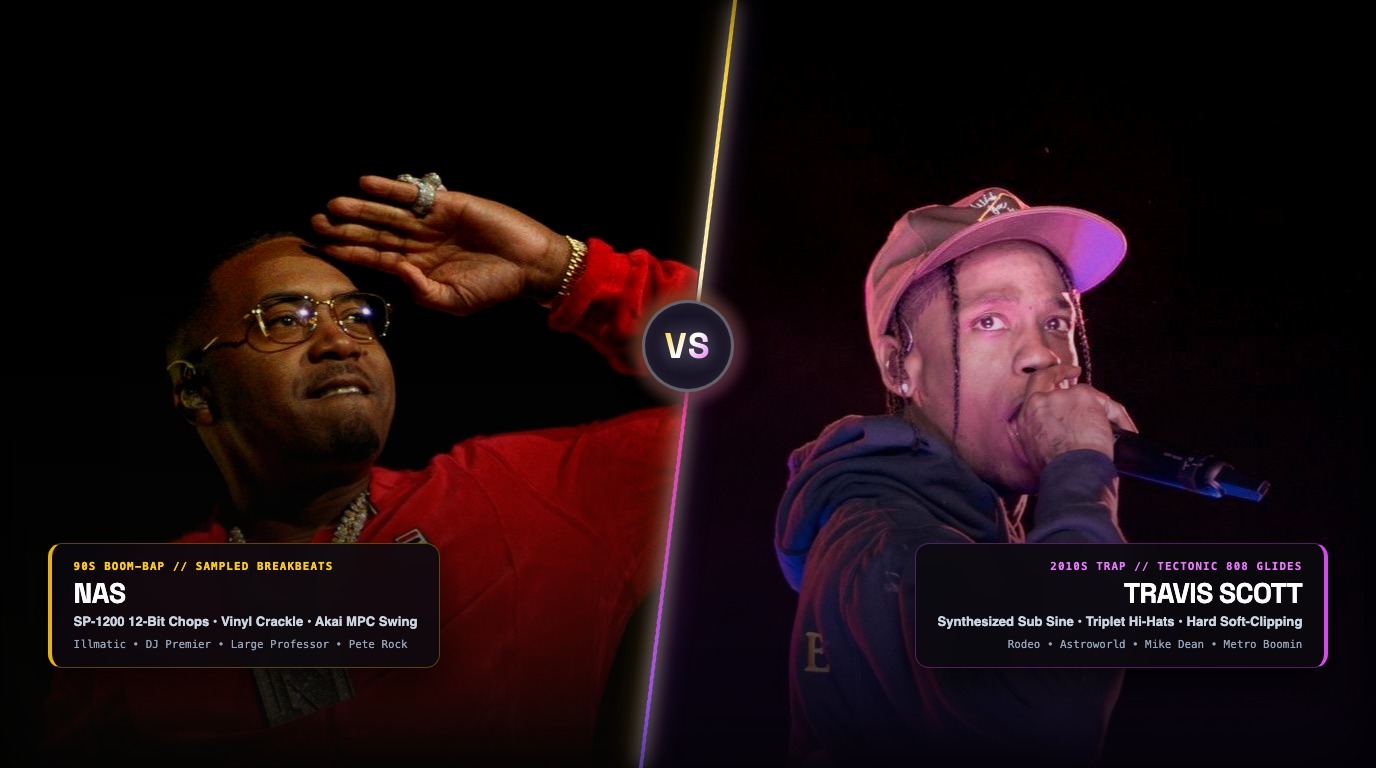
Showdown 1: The Raw Vinyl Kick vs. The Tectonic 808 Glide (Nas vs. Travis Scott)
Low-End Weight, Transient Mechanics, and Sample Architecture
Contrast how DJ Premier uses 12-bit filtered vinyl samples to frame Nas, versus how Mike Dean and Hit-Boy engineer Travis Scott's tectonic 808 glides.

The undisputed gold standard of 90s East Coast boom-bap. As documented in sample breakdowns on Tracklib, DJ Premier chopped two brief phrases from Joe Chambers' 'Mind Rain' on his E-mu SP-1200, looping them with microsecond precision. Mixed by Eddie Sancho at D&D Studios in New York, the track is centered around an explosive 85 Hz kick drum and an acoustic snare that hits like a whip. Frequencies below 40 Hz are completely silent, focusing the entire groove into raw, aggressive mid-frequency punch.
- 0:00 Listen to the famous piano sample from Joe Chambers' 'Mind Rain'. Notice the dusty vinyl noise floor and the distinctive pitch-down ringing overtones from the 12-bit sampler.
- 0:07 The drum beat drops. The kick drum carries immense punch around 85 Hz, accompanied by the natural sizzle of Kool & The Gang's 'N.T.' drum break.
- 0:30 Nas begins his legendary verse ('Rappers, I monkey flip em with the funky rhythm'). The vocal sits bone-dry in the exact center of the stereo field, unmasking the piano riff.

A multi-movement trap masterpiece from Travis Scott's Astroworld. As producer Hit-Boy broke down on Genius Deconstructed, the track relies on massive dynamic contrast. Master mix engineer Mike Dean pushed the 808 sub-bass through hard analog saturation, generating upper odd harmonics that make the sub audible on mobile phones while preserving tectonic sub-40Hz power on club sound systems.
- 0:00 Drake's intro floats over an ethereal, wide stereo synth pad with shimmering 15 kHz air and lush plate reverb.
- 1:01 First beat switch: Hit-Boy's beat enters with a vicious, distorted 808 sub note hitting down at 34 Hz. The sub-bass shakes the floor while the vocal remains completely unclipped.
- 3:00 Third beat switch (Tay Keith): listen to the rapid-fire 1/32nd-note triplet hi-hat rolls darting between left and right channels, driving the groove at 155 BPM.
Showdown 2: The MPC Swing Groove vs. The Triplet Trap Roll (Wu-Tang Clan vs. Future)
Groove Humanization, Snare Textures, and Midrange Warmth
Discover how RZA created emotional nostalgia using unquantized soul loops, while Metro Boomin engineered high-velocity trap momentum with synthetic claps and rapid rolls.
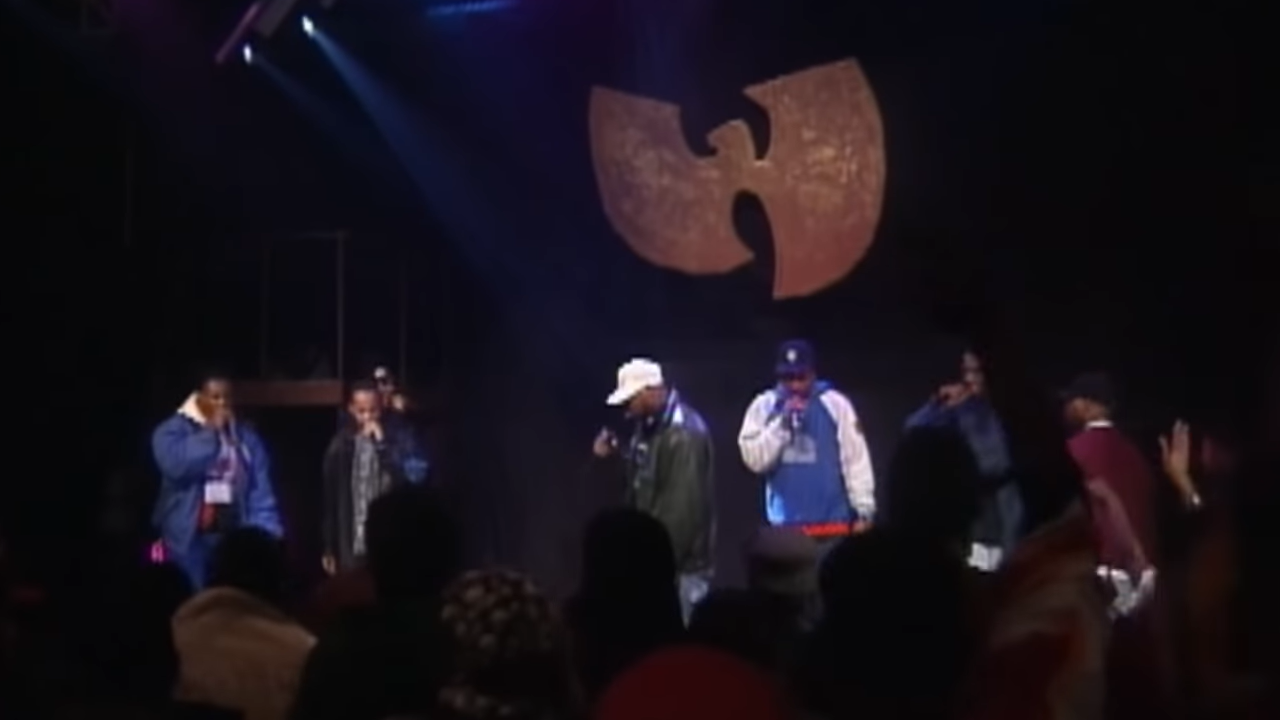
The emotional core of Wu-Tang Clan's debut. Produced by RZA inside his Staten Island apartment using an Ensoniq EPS sampler, the production captures raw, imperfect human groove. RZA intentionally avoided rigid quantization, letting the natural swing of the soul sample dictate the rhythm. The low end is anchored by a warm upright bass sample that blends organically into the acoustic kick drum.
- 0:00 The iconic piano loop from The Charmels' 'As Long As I've Got You'. Notice the warm, warbling vinyl wow-and-flutter and authentic needle crackle.
- 0:15 Raekwon's verse begins over an acoustic hi-hat playing a humanized shuffle swing (roughly 57% swing). It pulls behind the beat, creating a laid-back, head-nodding bounce.
- 1:38 Inspect the snare drum: it is thick and woody, with a natural ringing decay around 400 Hz that fills the space between piano chords.

The definitive mid-2010s trap anthem. Produced by Metro Boomin for Future, the track showcases the power of minimalist arrangement. Rather than stacking dozens of melodic instruments, Metro relies on an eerie flute loop, an unyielding 808 sub bassline, and lightning-fast hi-hat rolls. The mix leaves immense headroom for Future's hypnotic, autotuned vocal delivery.
- 0:00 Tommy Butler's 'Prison Song' flute sample enters. Notice how Metro Boomin filtered and pitch-shifted the sample, then drenched it in digital hall reverb.
- 0:14 The 808 drops alongside the clap. The clap hits like a gunshot: razor-thin, zero low-mid mud, and perfectly aligned to the grid.
- 0:28 Listen to the hi-hats: rapid 1/32nd-note rolls with aggressive pitch downward slides that build tension before each phrase resolution.
Showdown 3: The Dark Gritty Vinyl Loop vs. The Distorted 808 Menace (Mobb Deep vs. 21 Savage)
Low-End Menace, Dark Soundscapes, and Master Bus Loudness
Analyze how Havoc engineered sinister suspense using sampled piano textures and tape saturation, versus Metro Boomin and 21 Savage's bone-chilling 808 minimalism.
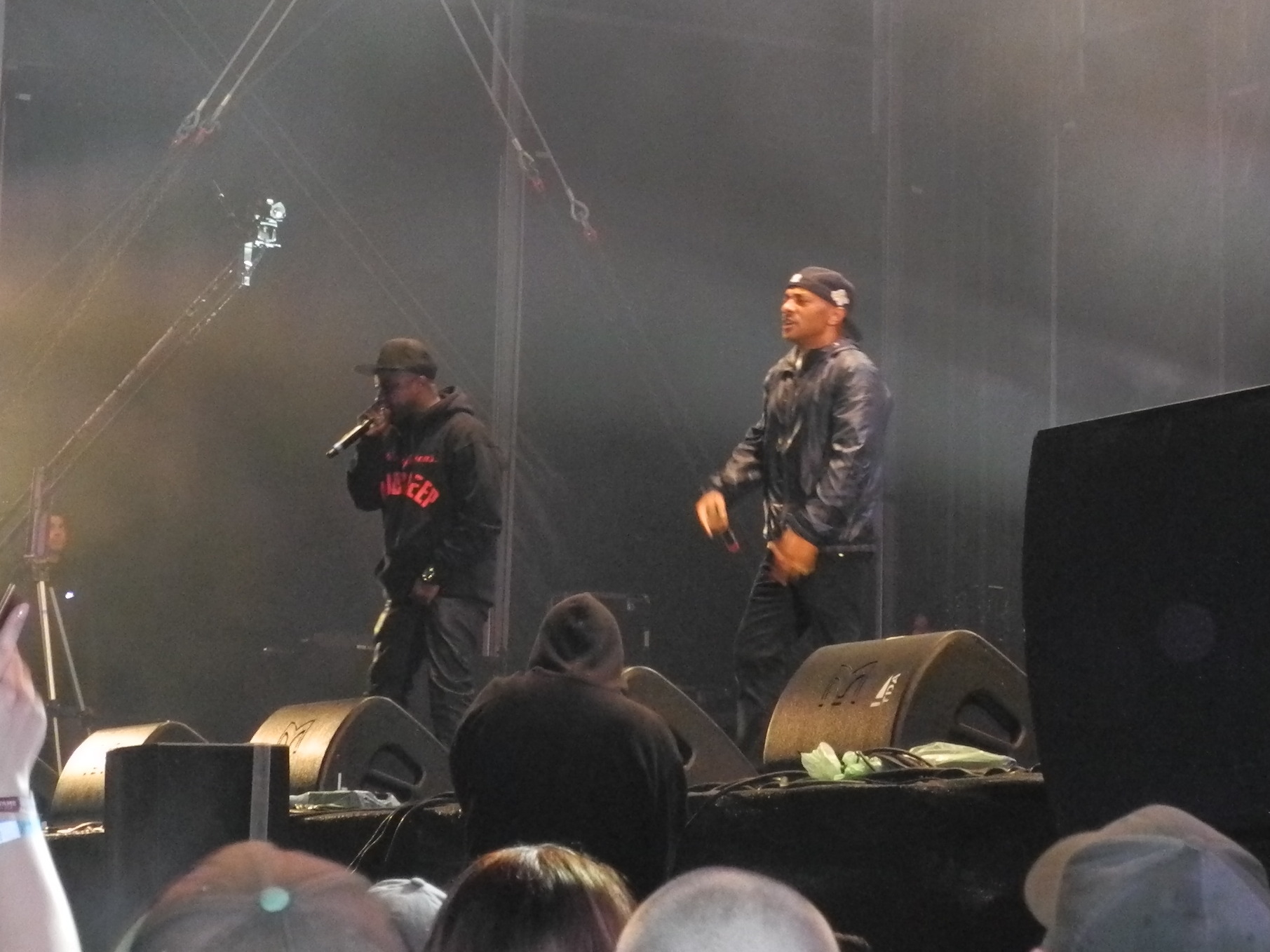
One of the darkest recordings in hip-hop history. Mobb Deep producer Havoc demonstrated how extreme sample manipulation creates original atmosphere. By pitching a jazz piano sample down by multiple semitones on an Ensoniq EPS-16+, the sampler's reconstruction filters introduced gritty low-mid weight. Mixed by Tony Smalios on an SSL desk, the low end is focused into a tight, driving bassline that never overwhelms the vocals.
- 0:00 The haunting, dark piano loop: Havoc sampled Herbie Hancock's 'Jessica', pitched it down dramatically, and slowed it down to create an ominous, hypnotic texture.
- 0:13 The snare hits: layered with a tambourine sample and pushed through an SSL channel compressor, creating an unmistakable metallic crack.
- 0:39 Prodigy's opening line ('To all the killers and the hundred dollar billers'). Notice the dark, warm low-end weight on the vocal, with zero modern high-frequency sibilant sizzle.

A masterclass in modern trap restraint. Produced by 21 Savage and Metro Boomin, the song features only four primary elements: a guitar riff, a short top-kick, a tuned 808 sub, and hi-hats. Mixed by Alex Tumay, the track preserves massive dynamic impact by ruthlessly carving out competing frequencies, allowing the 808 to deliver catastrophic bass power without distorting the master bus.
- 0:00 A minimalist, nylon-string acoustic guitar riff plays in isolation, clean and dry with subtle digital delay.
- 0:19 The 808 drops with a ferocious sub punch. Notice how the kick transient smacks your ears, while the sustained 808 sub extends smoothly without muddying the vocal.
- 1:15 21 Savage's dry, whispery vocal delivery: mixed dead-center by Alex Tumay, heavily de-essed, with dynamic notch cuts removing all low-mid boxiness.
5. Producer Playbook: Recreating Both Eras
You do not need a vintage $4,000 SP-1200 or an expensive analog studio to capture these signatures. Here are five practical DAW recipes to build authentic 90s boom-bap grit and blistering 2010s trap power inside your favorite DAW.
Theme 1: 12-Bit Aliasing and Ring-Mod Chops vs. Tuned 808 Sine Glides
90S BOOM-BAP (12-BIT RESAMPLING PIPELINE):
Soul Vinyl Record -> Speed Up Turntable to 45 RPM -> E-mu SP-1200 12-Bit Input -> Pitch Down -7 Semitones in Sampler
result: Captures iconic metallic aliasing ring and forced 72 dB quantization crunch

2010S TRAP (TUNED 808 GLIDE PIPELINE):
Sine Wave Generator -> Pitch-Tuned to Root Note -> Pitch Envelope Glides (80ms Portamento) -> Soft-Clipped Drive
result: Clean low-frequency sub glides with harmonic overtones that translate on mobile devices
The Boom-Bap 12-Bit Resampling Trick
- Speed Up the Source: Take a soul, jazz, or funk sample. Before bringing it into your sampler, speed it up by
+5 to +7 semitones(roughly 130% to 150% tempo). - Apply 12-Bit Bitcrushing: Insert a bitcrusher plugin (such as D16 Decimort 2 or your DAW's native bitcrusher). Set the resolution to 12-bit and the sample rate to 26.04 kHz. Engage an analog preamp filter model to mimic the input transformers of the SP-1200.
- Pitch Back Down: Pitch the audio back down by
-5 to -7 semitones. Because you downsampled while the audio was pitched up, pitching down introduces genuine ring modulation artifacts and aliasing grit into the high frequencies, giving you that authentic 1994 New York sound.
The Trap Tuned 808 Glide Formula
- Tune to the Root Key: An 808 is a bass instrument, not just a drum hit. Open a pure 808 sample or a sine-wave synthesizer (like SubLab or Serum). Find the root note of your song (e.g., F minor) and tune the 808 fundamental to
F1 (43.6 Hz). - Enable Mono Legato & Portamento: Set your sampler voice mode to Mono with Legato enabled. Turn on Glide/Portamento and set the glide time between
60 ms and 90 ms. - Write Octave Glides: In your piano roll, overlap consecutive MIDI notes. When transitioning from the root note up to the octave or fifth, overlap the notes by an eighth note. The 808 will smoothly bend in pitch, creating that signature modern trap movement.
Theme 2: Breakbeat Chopping & Swing Groove vs. 32nd-Note Triplet Hi-Hat Rolls
BOOM-BAP TIMING (UNQUANTIZED AKAI MPC SWING):
Acoustic Breakbeat Chop -> Akai MPC Drum Pads -> 16th-Note Swing Template (57% to 62% Delay) -> Nudge Snare +8ms Late
result: Laid-back syncopated rhythmic bounce that drives classic golden-era hip-hop groove

TRAP TIMING (GRID-LOCKED HIGH-VELOCITY TRIPLET ROLLS):
808 Hi-Hat -> 1/16th Note Foundation (140-160 BPM) -> 1/32nd & 1/64th Triplet Rolls -> Velocity & Pitch Drops
result: Frantic, hypnotic rhythm rolls that propel the energy of double-time trap arrangements
The Boom-Bap Breakbeat Chopping Workflow
- Chop Transient Slices: Take a classic acoustic breakbeat (such as Melvin Bliss's "Synthetic Substitution"). Do not loop the entire two bars. Slice the audio into individual hits: Kick, Snare, Ghost Snare, and Closed Hat.
- Dial in 57% MPC Swing: Set your DAW grid to 16th notes. Apply an MPC-style groove template set between 57% and 62% swing.
- Nudge the Snare Late: For that lazy, laid-back Dilla and Premier pocket, zoom in and manually nudge your snare hits 5 ms to 10 ms behind the grid line. When the kick hits directly on the downbeat while the snare lands slightly late, the beat develops an undeniable head-nodding groove.
The Trap 1/32nd-Note Triplet Hi-Hat Stutter
- Work at Double-Time (140 - 160 BPM): Trap is produced at double-time tempos. Set your DAW tempo to
145 BPM. - Lay the 1/8th-Note Foundation: Program a steady stream of closed 808 hi-hats on every 8th note.
- Paint Triplet Stutters: Switch your grid to 1/32nd Triplet (1/48) or 1/64th Triplet. Add fast 3-hit and 6-hit rolls right before the snare or clap lands on beat 3.
- Automate Pitch and Velocity: On fast rolls, draw a downward velocity ramp so the roll rushes into the beat naturally. Automate the pitch downward by
-3 semitonesacross the roll to mimic the famous Atlanta producer signature.
Theme 3: Vinyl Crackle & Tape Saturation vs. Hard Soft-Clipping the Mix Bus
BOOM-BAP GLUE (1/2-INCH TAPE COMPRESSION):
Stereo Drum Bus -> Studer A800 Tape Sim (15 IPS, +3 dB Drive) -> Saturated Tape Head -> Warm Compressed Print
result: Rounds off harsh cymbal spikes and glues acoustic kick and snare into a warm vintage picture

TRAP GLUE (HARD SOFT-CLIPPING THE MASTER):
Drum & 808 Bus -> Dedicated Soft Clipper (Shave 2-3 dB Peaks) -> Dynamic Headroom Gain -> Transparent True-Peak Limiter (-7 LUFS)
result: Massive commercial loudness without sub-bass limiter pumping or audible converter crackle
The Boom-Bap Tape Saturation Secret
- Layer Authentic Vinyl Noise: Do not rely on synthetic white noise. Layer a continuous stereo loop of authentic vinyl lead-in groove crackle underneath your beat at
-28 dB. - Apply 15 IPS Tape Emulation: Load an analog tape machine plugin (such as Waves Kramer Tape or UAD Studer A800). Set the tape speed to 15 IPS (Inches Per Second). Slower tape speeds create a gentle low-end bump around
80 Hz - 100 Hzand naturally soften harsh high-end cymbal sizzle above 12 kHz. - Drive the Input: Push the tape input gain until the needle dances into
+2 to +3 VU. The magnetic tape saturation will naturally compress your drum peaks, gluing the kick, snare, and vinyl samples into one vintage picture.
The Trap Soft-Clipping Loudness Formula
- Never Limit an 808 Directly: Traditional peak limiters react violently to sub-bass waveforms, causing unwanted pumping and distortion.
- Insert a Dedicated Soft Clipper: Place a dedicated soft clipper like AuxClip Pro across your drum bus and pre-master bus.
- Shave 2 dB to 4 dB Off the Peaks: Push your kick drum and clap into the clipper until you are shaving off
2 dB to 3 dBof transient peaks. The soft clipper rounds off the sharp waveform tips without pumping. Read our comprehensive guide on why you must clip drums before your master limiter. You gain immense commercial loudness while keeping the sub-bass clean and undistorted.
Theme 4: Mono Center Punch vs. Ultra-Wide Digital Stereo Space
BOOM-BAP STEREO (MONO MASS WITH VINYL AMBIENCE):
Kick, Snare, Bass & Lead Vocals -> 100% Dead Center (Mono) -> Reverb Return High-Passed at 300 Hz -> Focused Center Punch
result: Punchy mono foundation that never causes turntable styluses to skip out of vinyl grooves

TRAP STEREO (DEAD-MONO SUB & HYPER-WIDE SATELLITES):
Kick & 808 (Sub 100 Hz) -> 100% Mono Clamped -> Flanged Synths & Triplet Hats Panned 80% Wide -> Club-Ready Stereo Field
result: Earthquake sub-bass compatibility in mono club rigs paired with immersive headphone width
The Boom-Bap Mono Discipline
- Keep the Foundation in Mono: In 90s boom-bap, almost everything lives in the center: kick, snare, bassline, and lead vocal.
- Pan Only Secondary Horns and Cuts: Scratch hooks (DJ scratch choruses) and secondary brass stabs are panned gently (
20% to 35% Left and Right). - Check Mono Compatibility: Always sum your master bus to mono. A classic boom-bap beat will sound virtually identical in mono because it does not rely on phase-widening tricks.
The Trap Hyper-Wide Field
- Clamp Sub-Bass in Mono: Insert a Mid/Side EQ on your 808 and master bus. Engage a steep high-pass filter (24 dB/oct) on the Side channel at
100 Hz. All audio below 100 Hz is now 100% dead-mono, preventing phase cancellation in club sound systems. - Widen the Midrange Layers: Use stereo chorus, dimension expanders, and micro-delays on synth pads, bells, and guitar loops, pushing them far to the edges of the stereo field.
- Auto-Pan the Hats: Apply subtle auto-panning or stereo delay to your hi-hat rolls so they race across the stereo spectrum while the kick and 808 stay anchored in the middle.
Theme 5: The Headroom War (Dynamic Vinyl Groove vs. Modern Streaming Loudness)
BOOM-BAP DYNAMICS (BREATHING ROOM):
Raw Mix Bus (-18 dBFS RMS) -> Transparent Analog Bus Compressor (2:1 Ratio, 30ms Attack) -> Master Bus Output (-12 to -14 LUFS)
result: Massive 12 dB crest factor where acoustic snare cracks leap out with zero limiter pumping

TRAP DYNAMICS (COMPETITIVE STREAMING LOUDNESS):
High-Pass Filter All Non-Bass Tracks at 150 Hz -> Multiband Peak Shaving -> Staged Soft Clipping -> Output Ceiling at -0.3 dBFS (-7 LUFS)
result: Dense, competitive loudness with preserved transient punch on club and streaming systems
Managing 90s Dynamic Breathing Room
- Preserve Dynamic Crest Factor: In boom-bap, the distance between the average RMS energy and the highest snare drum peak is large (often
10 dB to 12 dB). Let the snare drum jump out. Do not crush it with limiters. - Aim for -12 to -14 LUFS: This loudness level leaves plenty of space for the kick drum to breathe, keeping the groove punchy and physical without fatiguing the listener. Learn more in our breakdown of what headroom really means in digital audio.
Mastering Trap for Club & Streaming Impact
- Target -7 to -8 LUFS Integrated: Modern streaming and club trap demands competitive loudness. To reach
-7 LUFSwithout ugly distortion: - High-Pass Everything Non-Bass: Cut low frequencies on all synths, claps, vocals, and effects at
150 Hzor higher. Low frequencies consume 80% of master limiter headroom; cleaning them out allows your 808 and kick to dominate without triggering limiter distortion.
6. The Producer Cheat Sheet: Boom-Bap Rules vs. Trap Rules
Save this cheat sheet next to your DAW monitors. When building a track, use these rules to stay faithful to the aesthetic of each era.
| Mixing / Production Decision | The 90s Boom-Bap Move (Sampled Soul) | The 2010s Trap Move (808 Sub Warfare) |
|---|---|---|
| Low-End Foundation | Filtered upright bass sample or live bass guitar (70 Hz - 120 Hz). | Tuned Roland TR-808 sine wave fundamental (30 Hz - 55 Hz). |
| Kick Drum Selection | Acoustic live drum break chop (Ludwig or Gretsch acoustic kick). | Short 5ms acoustic/synthetic click transient placed over 808. |
| Snare & Clap Strategy | 12-bit acoustic snare layered with vinyl noise; hits late for swing. | Layered synthetic 808 clap/rimshot hard-clipped against 0 dBFS. |
| Hi-Hat Rhythms | Swung 16th-note MPC shuffle (58% swing); natural acoustic timbre. | Continuous 8th-note hats with 1/32nd & 1/64th triplet pitch rolls. |
| Sample Manipulation | Pitch vinyl record up on turntable, sample at 12-bit, pitch down. | Digital time-stretch algorithms, reverse reverbs, half-time gross beat. |
| Vocal Treatment | Bone-dry, center-panned, warm low-mids, Neumann U87 into 1176. | Auto-Tune, high-shelf air boost (+4 dB at 12 kHz), wide stereo delays. |
| Stereo Imaging | Focused mono center; minimal stereo width to preserve vinyl groove. | Dead-mono sub under 100 Hz; hyper-wide stereo synths and FX. |
| Loudness & Dynamics | Open dynamic range (-12 to -14 LUFS); let snare transients breathe. | Blistering competitive loudness (-7 to -6 LUFS) via soft clippers. |
7. The Modern 2026 Hybrid: Blending Vintage Lo-Fi Sample Texture with 808 Sub-Bass Authority
In 2026, the most successful hip-hop and R&B producers (such as Boi-1da, Hit-Boy, and Alchemist) do not treat boom-bap and trap as mutually exclusive genres. They use the Modern 2026 Hybrid Pipeline: combining the emotional, dusty warmth of 90s vinyl breakbeats with the catastrophic low-end power of modern 808 sub-bass.
THE 2026 HYBRID BOOM-TRAP PRODUCTION PIPELINE:
Phase 1: Vintage Sample Prep (Dusty vinyl breakbeat loop with steep 24 dB/oct HPF at 90 Hz) -> Phase 2: Modern 808 Sub Foundation (Tuned 35 Hz sine wave glides sitting under breakbeat) -> Phase 3: Hybrid Drum Layering (Sampled acoustic snare layered with sharp trap clap nudged 2ms later) -> Phase 4: Staged Peak Control (AuxClip Pro soft clipping across drum bus before true-peak limiter)
result: Combines dusty golden-era vinyl breakbeat warmth and swing with catastrophic modern 808 sub authority
The 4-Step Hybrid Production Flow
1. Vintage Sample Prep: High-Pass the Breakbeat
Take a classic 90s breakbeat loop. Apply bitcrushing or vintage tape saturation to capture the gritty 12-bit crunch. However, engage a steep 24 dB/octave high-pass filter at 90 Hz. You preserve all the crack, acoustic room ambience, and organic groove of the live drummer, while clearing out the sub frequencies completely.
2. The 808 Underbelly: Inject Modern Sub Authority
Underneath your high-passed acoustic breakbeat, lay down a tuned Roland TR-808 sine wave. Set the 808 to play the root notes of your chord progression. Now you have the best of both worlds: the nostalgic, emotional swing of a 1994 record on top, powered by an earthquake-inducing 2020s sub-bass underneath.
3. Layer the Snare with a Modern Trap Clap
To ensure your beat translates in modern club and streaming playlists, layer your dusty 90s acoustic snare with a sharp, synthetic trap clap. Nudge the acoustic snare so it hits 2 milliseconds before the clap; this gives you the organic acoustic slap of boom-bap paired with the laser-focused transient bite of trap.
4. Soft-Clip Before Limiting
Do not let your master limiter destroy your hybrid mix. Place AuxClip Pro across your drum bus and shave off 2 dB to 3 dB of transient peaks from the kick and snare. Your hybrid beat will retain the dynamic warmth and swing of golden-era boom-bap while competing effortlessly at -7 LUFS on modern streaming platforms.