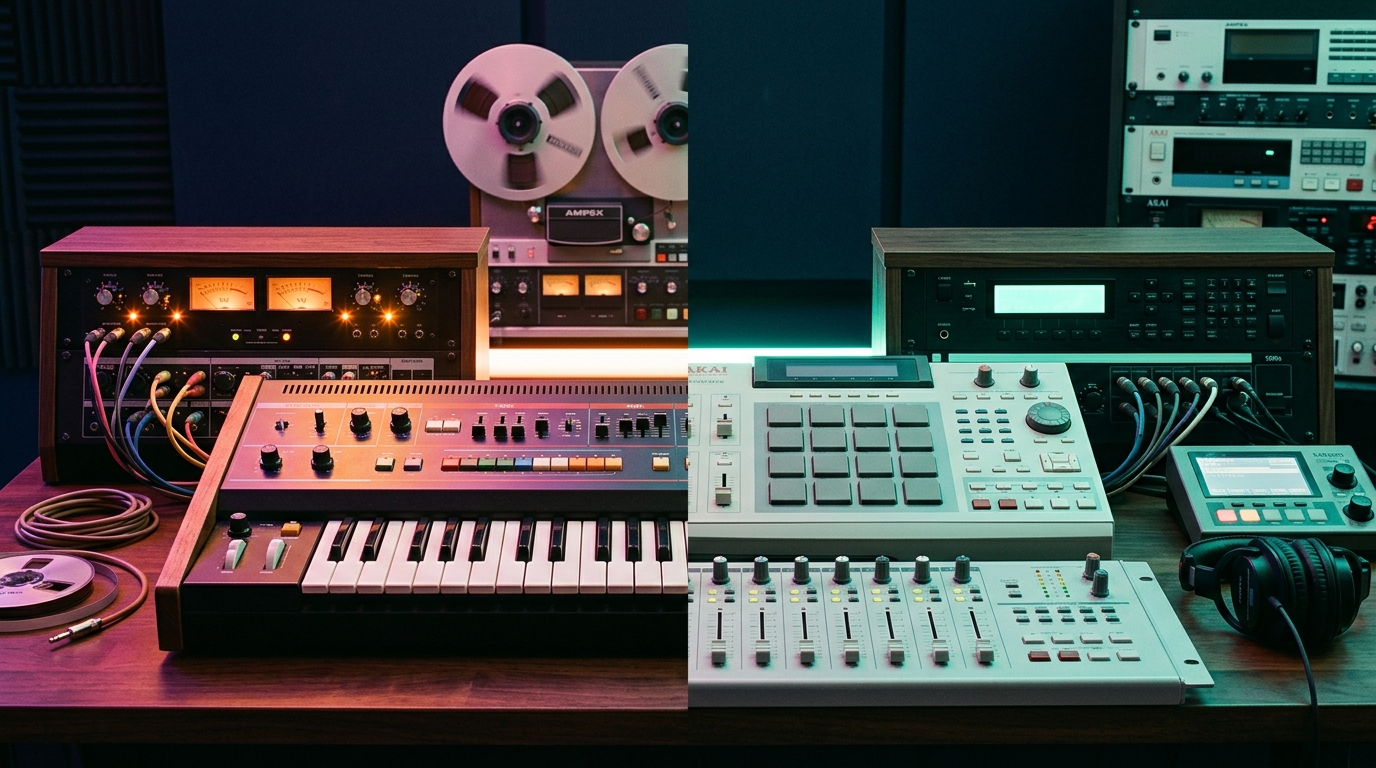

Here is a wild truth about human biology: you don't actually hear with your ears.
Your ears are just mechanical microphones, two fleshy funnels capturing wobbles in air pressure and converting them into tiny electrical pulses. The part of you that actually "hears" music, judges pitch, detects stereo width, and decides an 808 hits hard is your brain.
And here’s the fun part: your brain is remarkably easy to trick.
Just like optical illusions make straight lines look bent or static drawings look like they’re spinning, psychoacoustic illusions exploit the shortcuts, assumptions, and wiring quirks of your auditory cortex. Master film composers, legendary audio engineers, and pop hitmakers have quietly exploited these brain glitches for decades to induce panic, fake stadium-sized bass on tiny iPhone speakers, and make flat recordings sound like 3D holograms.
Grab your best pair of headphones, turn the volume up to a comfortable level, and let's break down 7 of the most famous, mind-bending auditory illusions in music history, complete with real audio examples you can test right now.
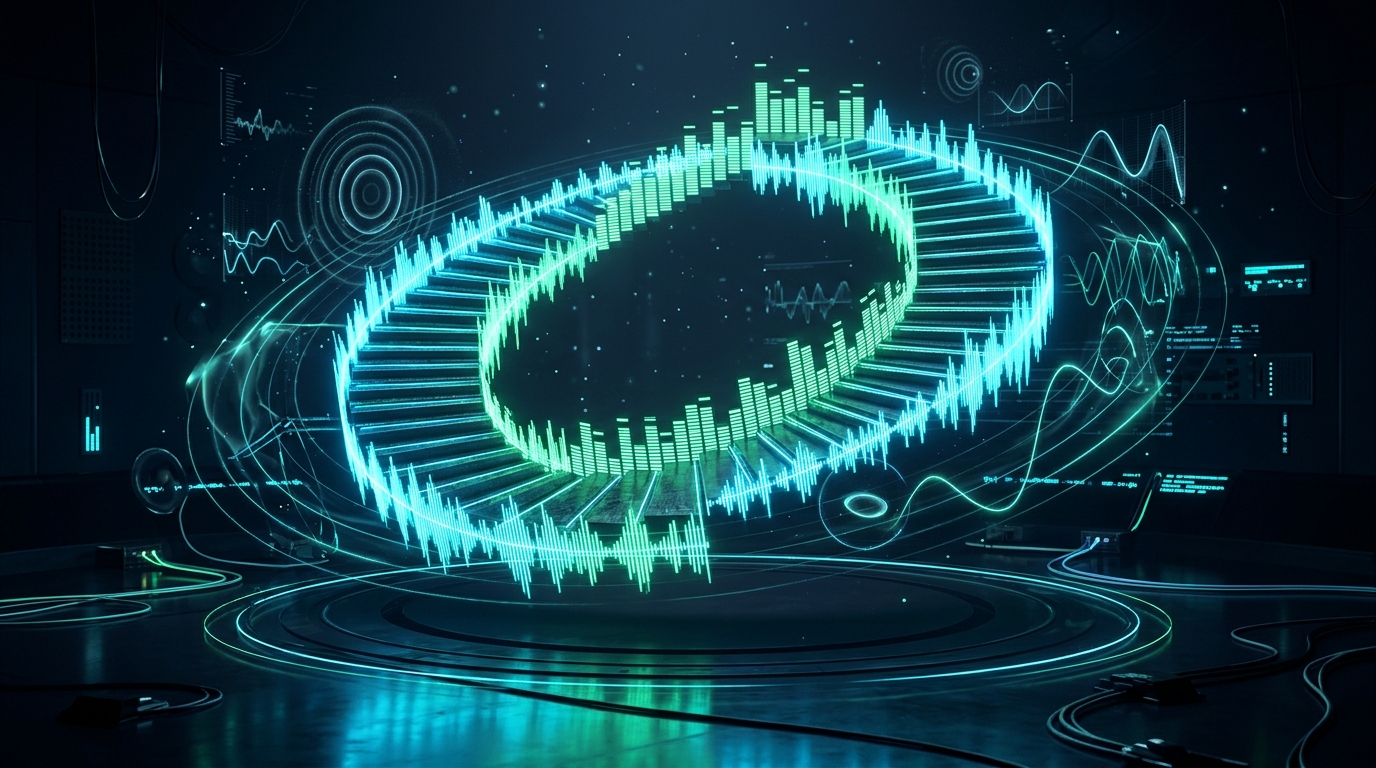
1. The Shepard-Risset Glissando (The Infinite Sonic Staircase)
Imagine climbing an infinite staircase. You keep stepping up and up, your calves are burning, you’re gaining altitude with every second... yet you somehow never reach the ceiling, and you never leave the second floor.
That is the Shepard Tone, first designed by cognitive scientist Roger Shepard in 1964 and transformed into a smooth continuous glide by French electronic music pioneer Jean-Claude Risset in 1969.
How The Trick Works
A Shepard scale is constructed using multiple sine waves spaced exactly one octave apart (often 6 to 8 octaves simultaneously). The secret sauce is a bell-shaped (Gaussian) volume curve:
- The lowest octave begins inaudibly quiet at the bottom of the spectrum.
- As the pitch glides upwards, it slowly gets louder as it approaches the middle of human hearing (~500 Hz to 1 kHz).
- As it rises further toward the stratosphere, it smoothly fades into silence.
- Meanwhile, an imperceptible new low octave has already faded in underneath to replace it.
Because your brain’s pattern-matching system focuses on the upward frequency motion of the loudest middle notes, it completely misses the quiet handoff at the top and bottom. The result? A sound that accelerates or ascends upward forever without ever getting higher!
Pop Culture & Historical Fame
- Hans Zimmer & Christopher Nolan (Dunkirk & The Dark Knight): Hans Zimmer famously used Shepard tones throughout the entire soundtrack of Dunkirk. By layering a ticking pocket-watch over an endless ascending Shepard glissando, Zimmer created an unbearable, uninterrupted feeling of rising panic that never resolves. In The Dark Knight, sound designer Richard King used Shepard synthesis for the Batpod's motorcycle engine, giving the impression that Batman is accelerating through 50 gears without ever shifting down!
- Super Mario 64 (The Endless Stairs): If you tried walking up the infamous endless staircase to face Bowser in Peach's castle before collecting 70 Power Stars, Koji Kondo's soundtrack tortured you with a relentlessly rising Shepard-like looping piano arpeggio while Mario fruitlessly ran in place.
- Pink Floyd (Echoes): Roger Waters and Richard Wright loved sonic trickery, subtly weaving ascending tone illusions into psychedelic bridge passages.
2. The Missing Fundamental (Phantom Bass)
Have you ever wondered why you can clearly hear the deep sub-bass line of a Metro Boomin trap beat or an 80s synth-pop groove through the tiny 50-cent speaker on your smartphone or a cheap pair of wired airplane earbuds?
Here is the acoustic impossibility: an iPhone speaker physically cannot move air below ~250 Hz. If an 808 drops a note at 65 Hz, the speaker's diaphragm is physically incapable of reproducing that sound.
Yet, your ears hear the 65 Hz note clear as day. How?
How The Trick Works
Musical sounds in nature are made of a fundamental frequency (the root note) plus a family of mathematical integer harmonics (\(2 \times F_0, 3 \times F_0, 4 \times F_0\), etc.).
- If a low note sits at \(65\text{ Hz}\), its natural overtones appear at \(130\text{ Hz}, 195\text{ Hz}, 260\text{ Hz}, 325\text{ Hz}\), and so on.
- When you strip away the 65 Hz fundamental entirely and play ONLY the harmonics (130, 195, 260...), your auditory cortex notices the exact \(65\text{ Hz}\) spacing between every peak.
- Your brain instantly decides: "Aha! That's a 65 Hz note with the bottom shaved off!" and physically synthesizes the missing 65 Hz root pitch inside your head.
You are literally hallucinating bass that does not exist in the physical room!
Pop Culture & Historical Significance
- 19th-Century Pipe Organs (The Resultant Bass): Building a 32-foot wooden organ pipe capable of hitting 16 Hz costs a fortune and requires a cathedral ceiling three stories high. Clever Victorian organ builders realized they could place an 8-foot pipe (64 Hz) right next to a 10⅔-foot pipe (48 Hz). The acoustic difference frequency (\(64 - 48 = 16\text{ Hz}\)) made parishioners believe the church possessed a colossal, floor-shaking 32-foot pipe!
- Waves MaxxBass & Renaissance Bass: In the late 1990s, Israeli DSP pioneers Waves Audio patented MaxxBass based directly on the missing fundamental principle. By generating tuned upper harmonics above 100 Hz, mixers made kick drums cut through television and radio broadcasts without overloading consumer speakers.
3. The Haas Effect (The 3D Stereo Hologram)
If you copy an audio track, pan one hard left and the other hard right, and delay the right side by 500 milliseconds, what do you hear? An obvious, rhythmic echo: Clack... Clack.
Now, start dialing that delay down: 200ms... 100ms... 50ms...
Suddenly, around 35 milliseconds, something miraculous happens inside your brain. The distinct echo vanishes into thin air. Instead of hearing two sounds, your brain fuses them into a single, massive, wrap-around 3D soundstage.
How The Trick Works
In 1949, German acoustician Dr. Helmut Haas examined how human ears survive in reflective rooms. In nature, every sound you hear in a cave or room bounces off rocks, walls, and trees. If your brain heard every reflection as a separate sound, you wouldn’t be able to understand a single sentence.
So nature evolved the Precedence Effect (the Law of the First Wavefront):
- If the exact same sound reaches both ears within 1 to 30 milliseconds, your brain completely suppresses the second sound as an echo.
- Instead, it combines both signals into a single audio image, using the tiny time difference to perceive spatial dimension, room size, and pan localization.
- But push the delay past 35 to 40 ms, and the threshold breaks: your brain gives up on spatial fusion and once again hears a clunky slapback echo.
Pop Culture & Historical Significance
- The Beatles & Abbey Road Studios ADT (1966): John Lennon despised spending hours re-singing vocal takes to double-track his voice. Abbey Road engineer Ken Townsend invented Artificial Double Tracking (ADT) by routing the sync head of a tape machine into a second tape deck, delaying the signal by 15–25 milliseconds. The Haas effect turned Lennon’s single voice into the iconic, wide stereo vocal sound that defines Revolver and Sgt. Pepper’s Lonely Hearts Club Band.
- Stadium Sound Engineering: In a 60,000-seat stadium, the sound from the main stage takes hundreds of milliseconds to travel to the back bleachers. Sound engineers install delay speaker towers halfway back into the crowd. By intentionally delaying those speakers so their sound arrives a few milliseconds after the stage wave, the entire 60,000-person audience perceives 100% of the music as originating straight from the artist on stage!
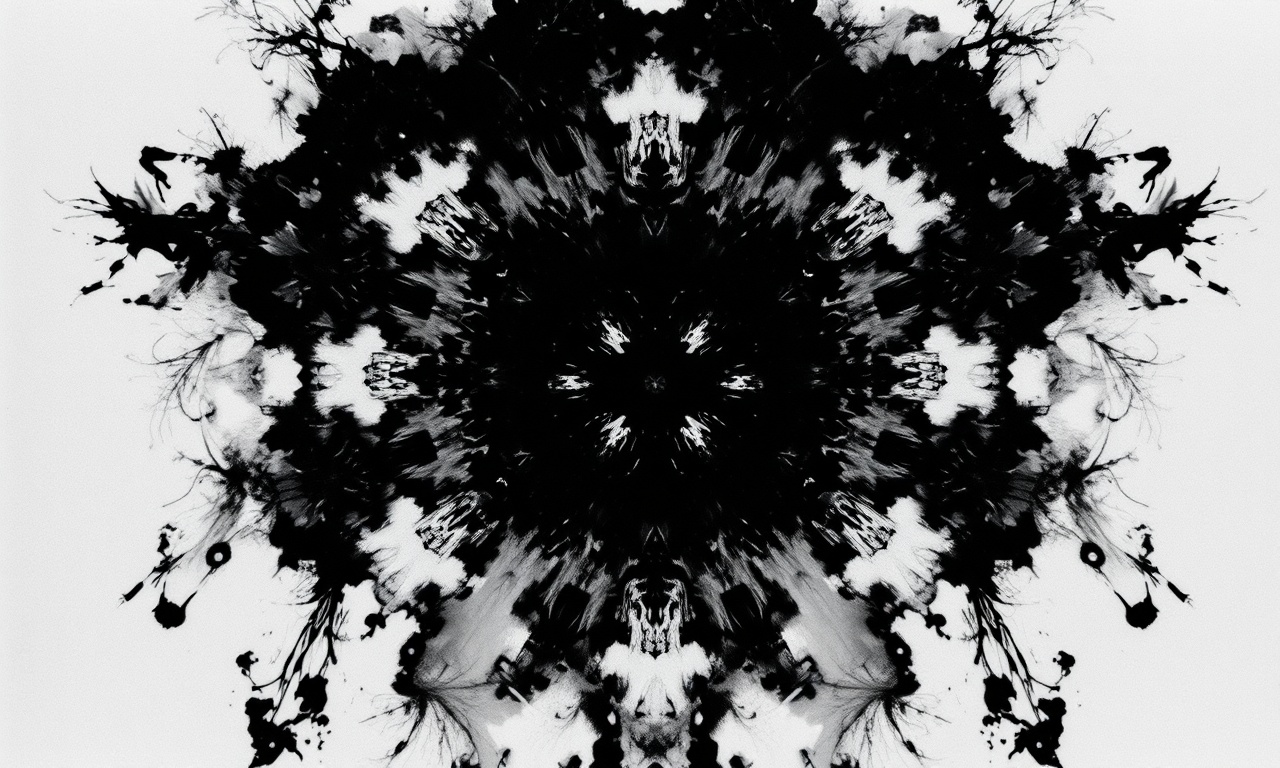
4. The Tritone Paradox (The Musical Rorschach Test)
Play this next audio clip for a room full of musicians and ask them a straightforward question: "Did the second note go UP or DOWN?"
Prepare for a screaming fist fight.
Half the room will swear with religious certainty that the pitch glided clearly upwards. The other half will look at them like they’ve lost their minds and insist the pitch plummeted downwards.
How The Trick Works
In 1986, cognitive psychologist Dr. Diana Deutsch devised a pair of tones spaced an exact tritone apart (6 semitones, like C and F#—the infamous "Devil's Interval" that divides the musical octave in half).
Each note is not a simple sine wave, but a computer-generated Shepard complex tone with octaves layered across the entire frequency range. Because there are no higher or lower harmonic clues to indicate which octave register the note belongs to, C and F# sit at opposite poles of a circular clock:
- Moving from C to F# is moving from 12 o'clock to 6 o'clock.
- Is going from 12 to 6 clockwise (up) or counter-clockwise (down)? There is no physical answer!
Your brain must guess based on its own subconscious internal pitch template.
5. The Speech-to-Song Illusion (The Loop That Makes You Sing)
In 1995, Dr. Diana Deutsch was in her home studio editing a spoken-word commentary CD. While scrubbing back and forth across a vocal recording, one particular spoken sentence accidentally looped over and over on her digital workstation:
*"The sounds as they appear to you are not only..."*
After listening to the loop play five or six times, something extraordinary happened: Deutsch looked up, stunned. She was no longer hearing spoken speech. She was hearing a woman singing a distinct, catchy, melodic song.
How The Trick Works
When you listen to conversational speech, your brain's auditory processing prioritizes lexical meaning (what the words mean) and filters out exact micro-pitch fluctuations.
However, when an exact phrase is repeated verbatim without changes in cadence, your brain recognizes that no new semantic information is coming. The language center takes a back seat, and your musical pitch circuitry takes over. Your brain begins mapping the natural intonation contours of the speaker’s voice onto musical intervals.
Even wilder: once your brain switches this phrase into "song mode," you can never un-hear it. If you replay the entire paragraph of normal conversation, the moment that phrase arrives, it jumps out of the speakers as singing!
Pop Culture & Viral Meme History
- The Gregory Brothers / Songify the News: In the late 2000s and early 2010s, YouTube legends The Gregory Brothers racked up hundreds of millions of views turning viral news clips into chart-topping pop anthems ("Bed Intruder Song" (Wikipedia), "Ain't Nobody Got Time for That"). While Auto-Tune helped lock the pitches, the core reason those tracks got stuck in our heads was the speech-to-song illusion: looping natural human cadence turns accidental spoken rhythm into infectious pop hooks.
- Modern Hip-Hop & UK Drill Vocal Chops: Modern producers frequently grab 1-second conversational voice memos or interview snippets, loop them continuously across 4 bars, and pitch-shift them until they become the melodic hook of an entire record.
6. Binaural Beats (The Brainwave Pulse That Isn't in the Air)
Put on your headphones. In your left ear, we play a pure, soothing sine wave at 200 Hz. In your right ear, we play a pure sine wave at 210 Hz.
If you hold a microphone up to your left headphone driver, it records a smooth, steady 200 Hz hum. If you hold it to the right driver, it records a smooth 210 Hz hum. Neither driver is pulsing. The air in your room has zero vibration at 10 Hz.
Yet, close your eyes, and inside the center of your skull, you hear an unmistakable, rhythmic 10 Hz pulse: wah-wah-wah-wah.
Where is that beat coming from? It is being manufactured inside your brainstem.
How The Trick Works
Discovered in 1839 by Prussian physicist Heinrich Wilhelm Dove, binaural beats occur because your brain uses tiny phase differences between your two ears to figure out where sounds are coming from in physical space.
When two frequencies with a tiny difference (\(\Delta f < 30\text{ Hz}\)) enter separate ears, the signals travel down your auditory nerves and meet in the superior olivary complex of the brainstem. The neurons attempt to reconcile the conflicting phase alignments, firing in sync with the difference frequency (\(210 - 200 = 10\text{ Hz}\)).
Because 10 Hz matches human Alpha brainwaves (associated with relaxed focus, meditation, and flow states), millions of creators and students listen to binaural audio while studying or producing music.
7. The Franssen Effect (The Ghost in the Speaker)
Imagine you are sitting in an acoustic mixing room with a pair of studio monitors.
A sound starts with a sharp, crisp click in your Left speaker. Over the next second, the sound smoothly and quietly pans over to the Right speaker, until 100% of the volume is blasting from the Right monitor and the Left monitor is completely silent.
Now ask anyone sitting on the studio couch: "Which speaker is that sound coming from?"
Without hesitation, they will point straight at the Left speaker. Even when they walk up and stick their ear 2 inches in front of the active Right speaker, their brain will fight them, insisting the phantom sound belongs on the left!
How The Trick Works
Dutch acoustic researcher Nico Franssen discovered the Franssen effect in 1960. Your brain determines sound localization through two primary mechanisms:
- High-frequency transient onsets: The sharp initial attack of a sound (like a drumstick hitting a snare or a finger plucking a string) gives your ears precise, unambiguous time-difference data.
- Sustained pure tones: Continuous, smooth sine waves provide almost zero timing clues once reflections begin bouncing off studio walls.
When Franssen triggered a sound with an abrupt click in Speaker A and crossfaded to a sustained sine wave in Speaker B, the brain captured the location from the initial click, locked it into short-term memory, and simply "turned off" its spatial tracking for the smooth tone. The brain refuses to update its hypothesis until a new transient click happens!
Why This Matters in Modern Mixing
The Franssen Effect is why transient design is everything in professional audio production.
When you mix a punchy kick drum and a warm bassline, your listeners' brains judge the spatial location, stereo clarity, and dynamic punch almost entirely from the first 5 to 15 milliseconds of the transient attack. If the attack transient is clean and uncluttered, the brain perceives the track as punchy and wide, even if the sustained decay of the sound transient is crowded and saturated.
Turning Psychoacoustic Science Into Studio Magic
Psychoacoustic illusions aren’t just party tricks to show your friends at 2:00 AM after a late-night studio session. They are the architectural blueprint of how humans perceive sound.
When you understand how the human brain fills in missing bass, fuses reflections into 3D stereo width, and locks onto transient attacks, you stop fighting with blunt EQ cuts and start sculpting audio with surgical intention.
If you want to put these principles to work in your own mixes:
- Use harmonic saturation to inject phantom low-end clarity into your bass without muddying the sub frequencies.
- Use micro-delays between 10ms and 25ms to widen backing vocals and synths into expansive 3D holograms.
- Keep transient onsets clean and transparent using dynamic sidechain tools, which dynamically carves acoustic space between clashing kicks and basslines without audible pumping.
Which Illusion Tricked Your Ears the Most?
Did Note 2 of the Tritone Paradox go up or down for you? Did you catch the moment the spoken sentence turned into singing?
Bookmark this guide, share it with your fellow producers and bandmates, and test their ears to see how differently their brains process the sound!