

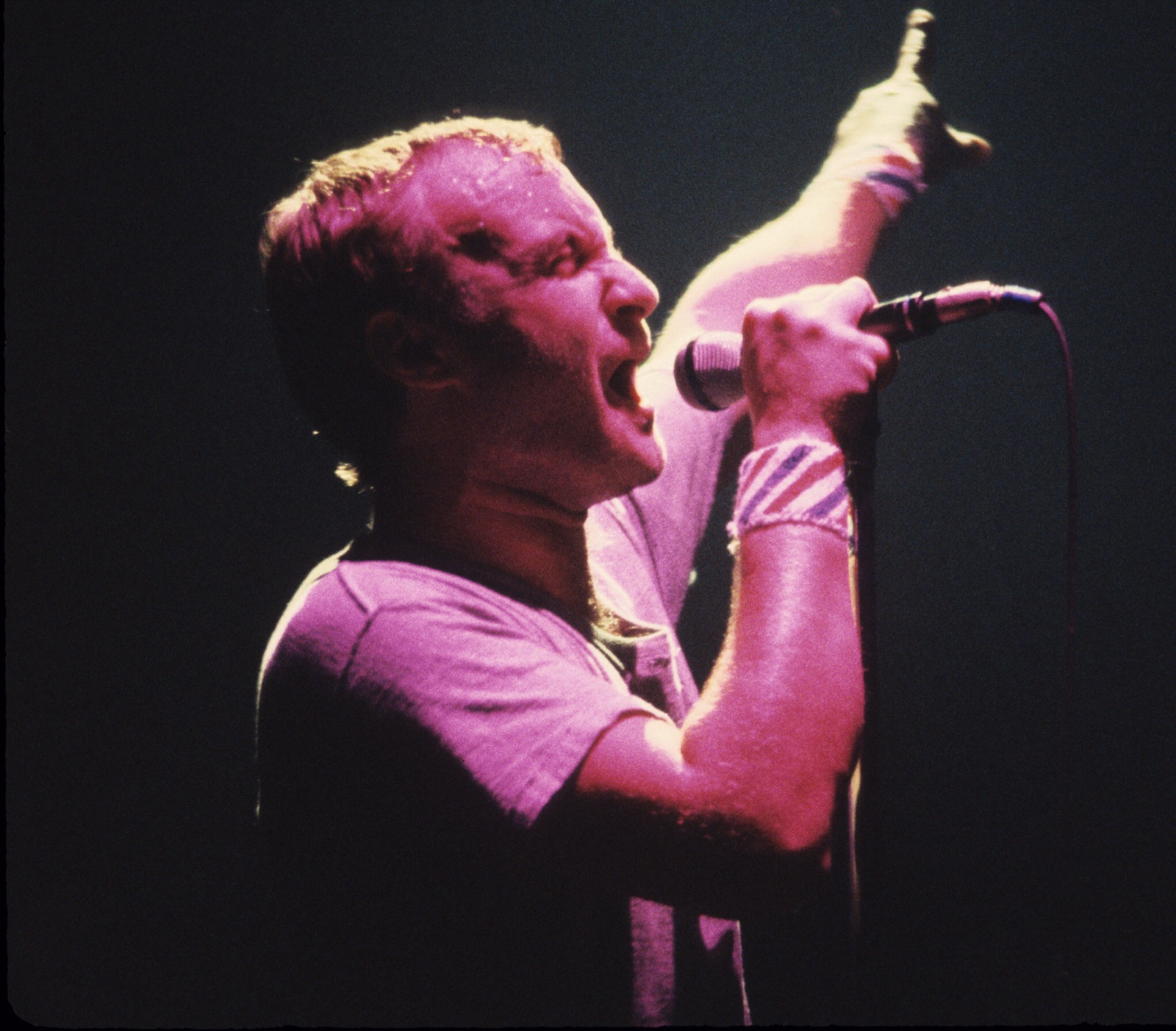
In 1979, inside London's Townhouse Studio 2, engineer Hugh Padgham accidentally depressed the talkback button on a brand-new Solid State Logic 4000 E-series console while Phil Collins was testing his Gretsch drum kit in a purpose-built stone room. The console's built-in Listen Mic Compressor (LMC) was designed with an aggressive brickwall limiter so engineers could hear faint control room whispers over screaming drummers. But when Collins slammed the snare drum, the stone walls erupted with thunderous early reflections that the LMC smashed into a deafening rectangular block of sound. Padgham instantly patched an SSL noise gate across the circuit to chop the tail off after exactly 200 milliseconds. When Collins recorded "In the Air Tonight" in 1981, that gated drum sound conquered global radio for the next ten years.
Forty years later, a teenage brother-and-sister duo working in a suburban Los Angeles bedroom executed the complete inverse revolution. Producing "bad guy" and When We All Fall Asleep, Where Do We Go?, Finneas O'Connell and Billie Eilish banished room acoustics completely. Instead of stone rooms and cavernous digital reverbs, they recorded lead vocals two inches from a Neumann TLM 103 capsule surrounded by thick duvets and acoustic foam. The result was ASMR Dryness: a claustrophobic, bone-dry vocal aesthetic where every mouth click, whisper resonance, and micro-breath hits your eardrum as if the singer is standing inside your skull.
How did modern music evolve from synthetic stadium reverberation to radical acoustic silence? Let us dissect the physical mechanics, spectral profiles, and mixing blueprints behind both eras.
1. The Mechanical Schism: The Townhouse Stone Room vs. The Blanket Closet
The divergence between 80s gated reverb and 2020s ASMR intimacy boils down to one variable: the decay curve of ambient early reflections.
1980S GATED REVERB (SUDDEN BRICKWALL TRUNCATION):
Direct Drum Transient (0 ms) -> Townhouse Stone Room / AMS RMX16 NonLin 2 (Massive Wash 10-180 ms) -> SSL 4000 G-Series VCA Gate (Closes at 200 ms) -> Instant Silence (Decay = 0 ms)
result: Colossal drum room explosion without reverberant lower-mid mud cluttering the synth mix

2020S ASMR DRYNESS (ZERO ROOM REFLECTION ENVELOPE):
Direct Vocal Whisper (0 ms) -> Heavy Duvet Damping (Zero Room Reflections) -> Proximity Chest Boost (+6 dB at 80 Hz) -> Surgical De-Esser (Zero Reverb Tail)
result: Intimate ear-to-mouth proximity where consonants and breaths hit the listener directly
The 1980s: The Artificial Room Explosion
During the 1980s, pop records were produced for massive arena PAs and FM radio broadcast compressors. Mix engineers like Hugh Padgham, Bob Clearmountain, and Trevor Horn needed drums to sound colossal without cluttering the musical arrangement.
Natural plate and hall reverbs have exponential decay tails (\(T_{60}\)) that linger for 2 to 4 seconds. In a busy synth-pop mix with Roland Jupiter-8 pads and gated rhythm guitars, long reverb tails turned the bass and lower-midrange into an unlistenable mud bath.
The gated reverb solved this problem through extreme dynamic trickery:
- The Stone Chamber: Studio drum rooms were lined with non-porous stone or gloss-glazed tile to maximize hard early reflections between 500 Hz and 4 kHz.
- Extreme Compression: The room microphones were smashed with the SSL Listen Mic Compressor at a 100:1 limiting ratio, boosting the room wash up to the same volume as the initial drum strike.
- The Hard Noise Gate: An analog VCA gate opened the instant the snare hit, held open for exactly 150 to 220 milliseconds, and then snapped shut with an ultra-steep 10 ms release.
The listener heard a massive stadium explosion on every beat, followed immediately by total digital black silence before the kick drum returned.
The 2020s: Headphone Claustrophobia
By 2020, music consumption shifted from arena sound systems and boomboxes to noise-canceling headphones (like Apple AirPods and Sony WH-1000XM4). In an intimate binaural headphone environment, artificial reverb creates distance, pushing the singer away from the listener.
Finneas and Billie Eilish realized that radical dryness delivers greater emotional impact than artificial space. By eliminating the room:
- The Proximity Effect: Moving the singer's mouth within 2 inches of a large-diaphragm condenser capsule generates a natural physical boost between 80 Hz and 200 Hz. This delivers full-bodied chest resonance without requiring EQ boosting.
- Micro-Dynamic Intimacy: Without ambient reverb masking high frequencies, the microphone captures microscopic mouth transients, tongue clicks, and subtle vocal cord vibrations that mimic sensory ASMR triggers.
- Dry Drums as Rhythmic Stabs: Instead of explosive gated snares, the drums in modern bedroom pop are dry finger-snaps, muted rimshots, and 808 subs that decay in single-digit milliseconds, leaving complete acoustic space for the whispering vocal.
2. The Spectrum War: Interactive A|B Curves
Compare the spectral frequency balance of a 1985 gated snare hit against a 2026 dry ASMR vocal channel. Use the interactive tool below to inspect the frequency curves:
3. The Arsenal Matrix: Analog Monsters vs. Modern Micro-Space
The gear profiles illustrate how studio design shifted from massive physical chambers to ultra-compact digital processing:
| Production Category | 1980s Gated Reverb Era | 2020s ASMR Dryness Era |
|---|---|---|
| Primary Microphone | Shure SM57 (Snare) / Neumann U87 (Room) | Neumann TLM 103 / Shure SM7B (Close Vocal) |
| Acoustic Environment | Stone/Marble Drum Room (Townhouse Studio 2) | Bedroom Closet with Duvets and Acoustic Blankets |
| Hardware Compression | SSL Listen Mic Compressor / Empirical Labs Distressor | Tube-Tech CL 1B / Universal Audio 1176LN ITB |
| Hardware Gating | SSL 4000 Console Noise Gate / Drawmer DS201 | FabFilter Pro-G / iZotope RX Mouth De-Click |
| Digital Reverb Unit | AMS RMX16 (Non-Lin 2 program) / EMT 250 | Complete Reverb Bypass / Valhalla VintageVerb (Subtle 0.3s Decay) |
| De-Essing Technology | DBX 902 Hardware De-Esser | FabFilter Pro-DS / Oeksound Soothe 2 |
| Mix Console | Solid State Logic 4000 E Series (48-channel) | Apple MacBook Pro + Universal Audio Apollo x4 |
4. The Studio Showdowns: 3 Defining Mix Battles
Listen to how these divergent spatial philosophies shape the emotional impact of three monumental studio showdowns.
Stone Room Gated Drum Blast vs. Zero-Reverb Ear Intimacy
Compare the world's most famous drum fill with the claustrophobic whisper that redefined modern streaming.
- 3:16 The legendary drum fill enters: listen to the unnatural rectangular shape of the room tail. The reverb explodes with enormous volume and abruptly drops to dead zero before each tom hit.
- 3:40 Notice how the gated room ambience creates huge physical size without muddying Collins's dry vocal or the pulsing Prophet-5 synth pads underneath.

- 0:14 When Billie's vocal enters, notice the complete absence of room reflections. Her voice is panned dead-center and sits directly against your eardrum with hyper-detailed dry clarity.
- 1:32 During the whispered 'duh' drop, the mix cuts all backing instrumentation, leaving a bone-dry finger snap and sub-bass pulse that resets the listener's spatial reference.
AMS RMX16 Non-Lin Gated Snare vs. Dry Finger-Snap Minimalism
Discover how Peter Gabriel weaponized gated reverb for explosive funk impact, compared to Lorde's cavern-killing pop revolution.

- 0:24 The snare hits with an explosive synthetic crack. This is the classic AMS RMX16 'Non-Lin 2' preset: artificial digital early reflections that hit maximum density before abruptly stopping.
- 1:15 The brass stabs and gated snare hit in perfect unison, punching through the dense brass arrangement with sharp transient authority.

- 0:05 The beat consists solely of a dry 808 kick and finger snaps with zero reverb tails. Lorde's stacked vocal harmonies provide all acoustic dimension.
- 0:48 Pre-chorus vocal layering: despite four vocal harmony tracks entering, each layer is dry and edited with razor-sharp fades, keeping the stereo field uncluttered.
Lexicon Plate Diffusion vs. Intimate Bedroom Vocal Realism
Contrast Whitney Houston's soaring, stadium-reverberant vocal belting with Olivia Rodrigo's raw, unvarnished proximity.

- 0:12 The cowbell and gated electronic snare create a massive stereo wash. The high-frequency decay is diffused across both channels with rich chorused shimmer.
- 1:45 Whitney's vocal soars into a 3.5-second Lexicon hall reverb tail. The reverb decay is automated to expand during high notes and duck during faster lyrical passages.

- 0:01 The car-door chime and intimate piano entry: Olivia's voice is recorded dry with zero early reflections, highlighting every crack and emotional tear in her voice.
- 2:14 The bridge crescendo: wide ambient reverbs enter on the background choir, but her lead vocal remains dry, keeping her right in front of the listener's eyes.
5. Producer Playbook: 5 Acoustic Space Rules
Use these five professional rules to control acoustic depth in your own productions:
1. The Pre-Delay Equation for Vocal Clarity
If you must use reverb on a modern pop vocal, never let the wet signal blur the initial consonant transients. Always calculate your minimum pre-delay:
At 120 BPM, set your pre-delay to at least 25 to 50 ms. This allows the clean, un-reverberated vocal consonant (like 'T', 'K', or 'P') to register clearly before the ambient reflections bloom behind it.
2. Craft the Classic SSL Gated Snare in Any DAW
Recreate Hugh Padgham's famous drum chain inside your DAW:
- Route your dry snare track into an auxiliary return bus.
- Insert a heavy room reverb plugin (or impulse response of a stone chamber).
- Set reverb decay time to 1.8 seconds with 0% dry and 100% wet.
- Follow the reverb immediately with a dedicated noise gate plugin (like FabFilter Pro-G).
- Set the gate: Hold: 180 ms, Release: 12 ms, Threshold: -18 dB.
- Blend the gated return fader underneath your dry snare until you achieve explosive, punchy stadium impact without muddying your mix.
3. Capture Bedroom ASMR Intimacy Without Noise
Recording hyper-dry vocals requires aggressive gain staging. Because you are boosting subtle whisper details, your background noise floor will rise:
- Position the singer 2 to 3 inches from the pop filter, angled slightly off-axis (15 degrees) to prevent plosive wind blasts.
- Hang heavy fiberglass moving blankets or thick winter duvets in a horseshoe shape directly behind and beside the singer. This absorbs room reflections before they reach the rear of the cardioid capsule.
- Use an intelligent spectral de-noise plugin (like iZotope RX Voice De-noise) to strip room HVAC hiss before applying compression.
4. High-Pass Your Reverb Returns (The Abbey Road Trick)
Never send raw full-frequency audio into your reverb plugins:
- Insert an EQ directly before your reverb processor.
- Roll off low frequencies below 450 Hz with a 12 dB/octave high-pass filter to prevent low-end mud.
- Roll off high frequencies above 6.5 kHz with a gentle low-pass shelf.
This keeps your reverb tail focused strictly in the warm midrange, leaving the sub-bass and high air bands crisp and uncluttered.
5. Create Depth Contrast Between Dry Lead and Wet Backings
The secret to modern pop spatial depth is contrast. If every instrument is soaked in reverb, the mix feels distant and small. If every track is dry, the mix feels flat and two-dimensional:
- Keep the lead vocal and center kick/snare bone dry (0% to 5% wet).
- Push background vocal harmonies, stereo synth pads, and ambient guitars into 60% wet hall reverbs panned hard left and right.
The dry lead pops forward dramatically against the wide ambient background curtain.
6. Producer Cheat Sheet: Gated Power vs. ASMR Intimacy
Quick parameter reference for dialed-in spatial engineering:
| Engineering Parameter | 1980s Gated Reverb Snare | 2020s ASMR Dry Vocal |
|---|---|---|
| Microphone Distance | 3 to 15 feet (Room ambient mics) | 1 to 3 inches (Proximity close-mic) |
| Acoustic Treatment | Stone, ceramic tile, untreated hard walls | Heavy duvets, acoustic blankets, foam baffles |
| Reverb Program | Non-Linear / Gated Room (0.2s duration) | Completely Bypassed or Micro-Room (<0.2s) |
| Gate Hold Time | 140 ms to 220 ms (Tempo-synced) | Not applicable / Expander for breath floor |
| Gate Release Time | 8 ms to 25 ms (Instantaneous brickwall snap) | Smooth 150 ms expander recovery |
| Low-End Management | High-pass filter engaged at 150 Hz | Proximity boost embraced down to 70 Hz |
| Sibilance Processing | Analog optical de-esser (-4 dB reduction) | Dynamic split-band de-esser + Oeksound Soothe 2 |
| Stereo Field Position | Wide stereo room return (L/R) | Dead-center mono lead (0% stereo spread) |
7. The Modern 2026 Hybrid Pipeline
You can blend the explosive impact of 80s gated acoustics with the intimate emotional power of 2020s ASMR dryness. Here is the modern 4-step production workflow:
THE 2026 ASMR-VERB HYBRID VOCAL PIPELINE:
Phase 1: Ultra-Dry Acoustic Tracking (Heavy duvet baffling & 2-inch condenser proximity) -> Phase 2: Surgical De-Resonance (Soothe2 notch at 350 Hz & 700 Hz) -> Phase 3: Parallel Gated Reverb Aux (Non-linear impulse response with 160 ms gate hold) -> Phase 4: Dynamic Reverb Automation (100% dry in intimate verses, unmutes on chorus drops)
result: Intimate hyper-close verse vocals that explode into stadium-scale power on chorus drops- Step 1: Track Ultra-Dry in a Treated Enclosure: Capture your lead vocal and snare sample with zero room reflection wash. Use heavy acoustic duvets to kill all flutter echoes and boundary reflections.
- Step 2: Sculpt the Dry Transient Core: Apply surgical corrective EQ to remove boxy room resonances at 350 Hz and 700 Hz. Insert a fast compressor (like an 1176 in 4:1 mode) to pin the performance dead-center in the stereo field.
- Step 3: Build the Gated Auxiliary Ambience: Create an aux send to a non-linear room impulse response. Insert an aggressive noise gate after the reverb. Set the gate hold time to 160 ms and release to 15 ms.
- Step 4: Automate Spatial Dynamics: Keep the gated reverb completely muted during intimate verses to let the ASMR dry performance create ear-to-mouth proximity. Unmute the gated aux bus on the chorus downbeat to unleash explosive stadium power.
The 1980s proved that artificial room reflections can turn drums into explosive sonic weapons. The 2020s proved that absolute dryness creates an emotional bond that stadium reverb could never match. Master both techniques, and you will command complete authority over depth and space in your mixes.