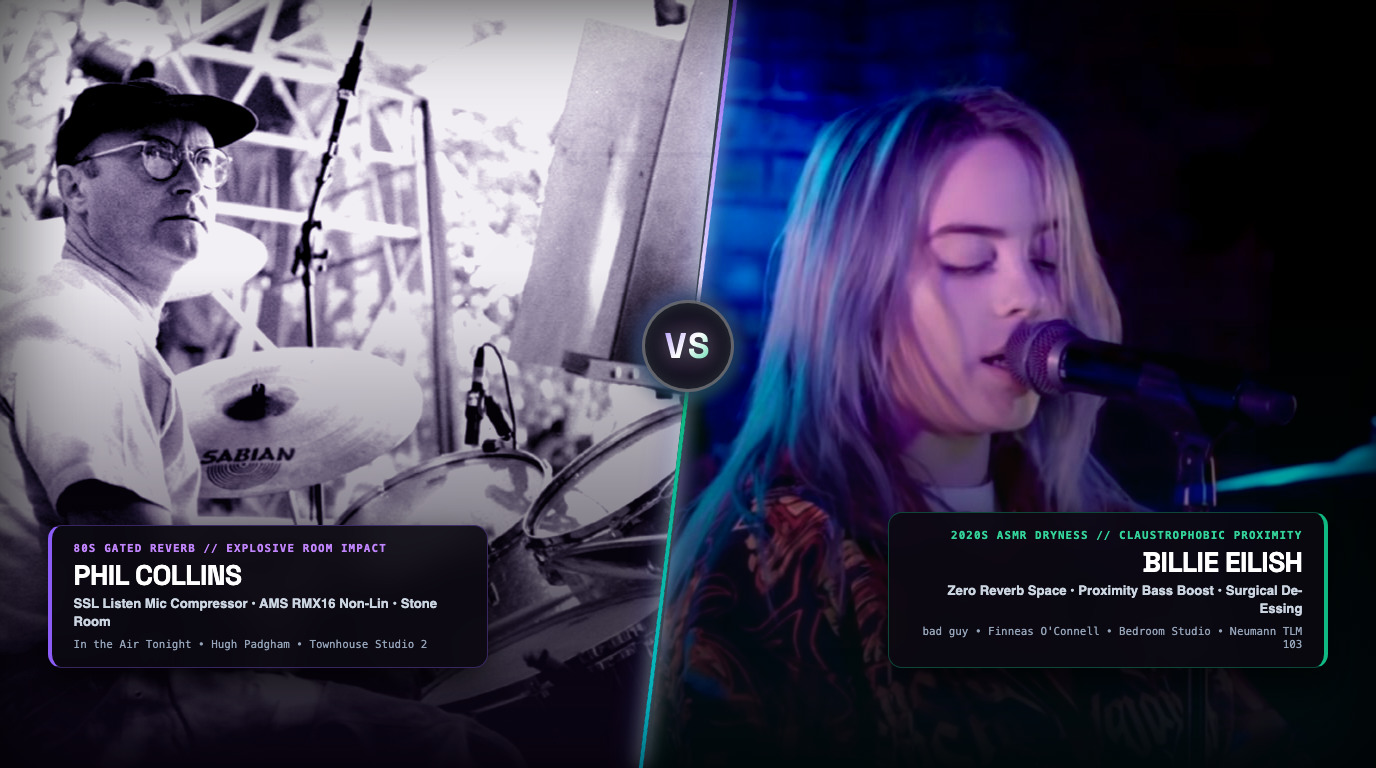

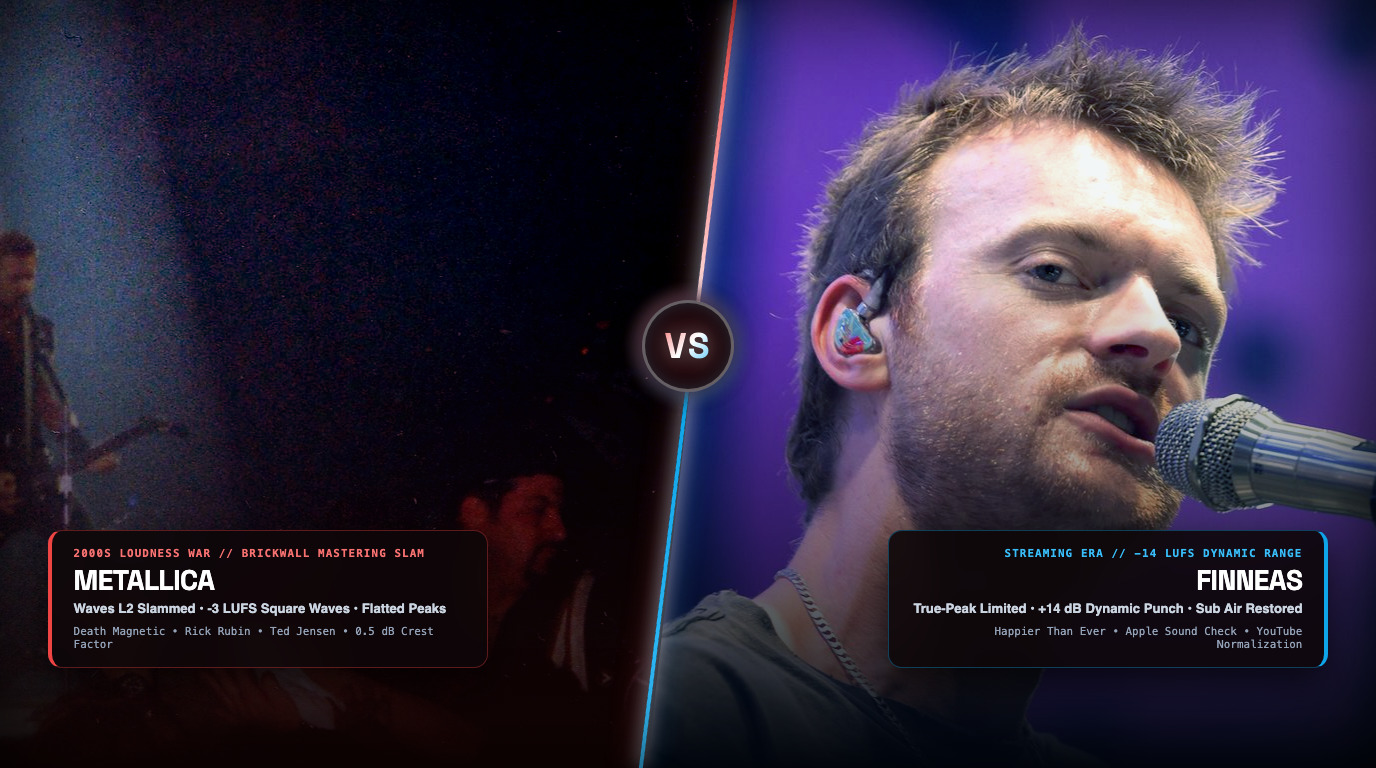
In September 2008, Metallica released their ninth studio album, Death Magnetic, produced by Rick Rubin. When fans popped the CD into their car stereos and high-end hi-fi systems, they did not hear glorious heavy metal triumph; they heard audible, crackling digital distortion on every kick drum hit. Mastering engineer Ted Jensen took the unprecedented step of posting an open letter online, stating that the mixes had already arrived at his mastering studio smashed into clipping: "The mixes were already pushed to the ragged edge before they arrived. Believe me, I'm not proud to be associated with this one." When gamers booted up Guitar Hero III containing the unmastered stem files of the exact same tracks, the video game sounded punchier, clearer, and vastly superior to the commercial retail CD. The Loudness War had officially collapsed under its own absurdity.
For nearly two decades, record labels bullied mastering engineers into driving digital limiters into the red to ensure their CD sounded louder than the next track on a 5-disc CD changer. But when Spotify, Apple Music, and YouTube took over the music industry, they introduced Loudness Normalization based on ITU-R BS.1770 and LUFS (Loudness Units relative to Full Scale). Suddenly, if you pushed a master to an ear-bleeding -5 LUFS, Spotify's automated playback engine turned your track down by -9 dB to match its standard -14 LUFS target. Instead of sounding louder, your hyper-compressed master sounded flat, squashed, and tiny next to dynamically open records by artists like Finneas O'Connell, Billie Eilish, and Silk Sonic.
How did loudness normalization dismantle the industry's most destructive engineering obsession? Let us examine the DSP mechanics, spectral physics, and modern mastering frameworks that saved musical dynamics.
1. The Mechanical Schism: Waves L2 Brickwalls vs. Loudness Penalty Algorithms
The battle between the Loudness War and Streaming Normalization is an architectural conflict between Peak Volume Squeezing and Perceptual Loudness Leveling:
THE 2000S LOUDNESS WAR (PHYSICAL CREST FACTOR DESTRUCTION):
Audio Mix Bus -> Waves L2 Ultramaximizer (-14 dB Threshold) -> Inter-Sample Peak Clipping (+3 dBTP Overs) -> Smashed 0.5 dB Crest Brick
result: Smashed transient punch, audible converter crackle, and listener ear fatigue

MODERN STREAMING NORMALIZATION (AUTOMATED PENALTY DSP):
Master Bus at -8 LUFS -> Streaming Ingest Engine (ITU-R BS.1770) -> Apply -6 dB Normalization Offset -> -14 LUFS Playback Target
result: Smashed masters are automatically turned down, while dynamic masters retain punch and air
The 2000s: The Cult of the Waves L2
In 1994, Waves released the L1 Ultramaximizer, followed in 2000 by the hardware and plugin Waves L2. It was a revolutionary digital peak limiter with lookahead capability, capable of preventing digital overs (0 dBFS) while slicing transient peaks off audio signals.
Producers quickly discovered that if you lowered the threshold by 8 to 14 dB:
- The snare and kick transients were sheared flat against the 0 dBFS digital ceiling.
- The average RMS (Root Mean Square) energy skyrocketed from a healthy -16 dB up to an intense -6 dB.
- The crest factor (the mathematical difference between transient peak and average RMS volume) collapsed from a punchy 14 dB down to an anemic 1 to 2 dB.
The disastrous consequence was Inter-Sample Peaks (ISPs). While the digital sample points never exceeded 0 dBFS on a standard peak meter, the analog reconstruction filter inside every consumer Digital-to-Analog Converter (DAC) must interpolate smooth continuous waveforms between those digital points. When two consecutive samples hit 0 dBFS at high frequencies, the reconstructed analog curve shoots up to +2.5 or +3.5 dB above the converter's power rails, producing harsh, square-wave distortion inside consumer speakers and car stereos.

Modern Streaming: The -14 LUFS Level Playing Field
When streaming services became the dominant distribution channel, they solved the loudness war using perceptual loudness algorithms defined by the International Telecommunication Union (ITU-R BS.1770):
- K-Weighting Pre-Filter: The LUFS metering algorithm applies a specialized high-pass and high-shelf curve mimicking the human ear's equal-loudness contours (the Fletcher-Munson effect). This ensures that sub-bass frequencies below 50 Hz do not trick the meter into registering artificial loudness.
- Automated Volume Offsets: Spotify normalizes music to -14 LUFS, Apple Music (Sound Check) targets approximately -16 LUFS, and YouTube normalizes to -14 LUFS. If your track arrives mastered at -7 LUFS, the streaming platform turns your master fader down by exactly 7 dB.
- The Loudness Penalty: When your squashed -7 LUFS master is pulled down by 7 dB, it now plays at the exact same perceived volume as a punchy -14 LUFS master. But because your transients were sheared off during limiting, your drums sound small and lifeless, while the dynamic master punches through the speakers with 8 dB of explosive transient headroom.
2. The Spectrum War: Interactive A|B Curves
Compare the frequency spectrum of a brickwalled 2008 CD master against a modern streaming master with 12 dB of dynamic range. Toggle between the curves below:
3. The Arsenal Matrix: 2000s Limiters vs. 2026 Metering Engines
The tools of mastering evolved from crude volume hammers to multi-stage precision DSP:
| Mastering Category | 2000s Loudness War Arsenal | 2026 Modern Streaming Arsenal |
|---|---|---|
| Peak Limiting | Waves L2 Ultramaximizer / TC Electronic Finalizer | FabFilter Pro-L 2 / Weiss DS1-MK3 / Leapwing DynOne |
| Inter-Sample Peak DSP | None (Ignored 0 dBFS overs entirely) | True Peak Limiting with 4x/8x Inter-Sample Oversampling |
| Loudness Metering | Standard Peak Meters + RMS Meters | ITU-R BS.1770 / EBU R128 LUFS Metering (Youlean, NUGEN) |
| Transient Management | Slammed into analog console / ADC clipping | Dedicated Soft Clippers (Clip-Zero, Bite Harder, Flatline) |
| Clipping Stage | Hard digital clipping of Prism / Apogee converters | Multi-stage staged clipping: Track -> Bus -> Pre-Master |
| Target Loudness | -6 to -4 LUFS (-8 dB RMS) | -12 to -9 LUFS (Club/Pop) / -14 to -16 LUFS (Acoustic/Indie) |
| Delivery Ceiling | 0.0 dBFS or -0.1 dBFS (Causing ISP overs) | -0.5 to -1.0 dBTP True Peak (Preventing lossy AAC/Ogg clips) |
4. The Studio Showdowns: 3 Defining Mix Battles
Listen to how extreme limiter abuse compares to dynamic mastering across three legendary recording matchups:
Smashed Rick Rubin Limiting vs. Finneas Dynamic Range
Hear the ultimate Loudness War tragedy compared to a modern Grammy-winning master that travels from a whisper to a hurricane.
- 0:45 Listen to the hi-hat and rhythm guitar intro. Even during this quiet introductory passage, the noise floor is pumped up to -8 LUFS, leaving nowhere to go dynamically when the drums kick in.
- 6:45 During the fast double-bass thrash finale, listen to Lars Ulrich's snare. Every drum strike produces an audible fuzzy crackle as the waveform clips the digital ceiling.

- 0:15 The acoustic ukulele intro measures around -22 LUFS. It is intimate, quiet, and retains its full natural transient fidelity.
- 3:10 The rock explosion: the track leaps upwards by nearly 14 dB of perceived energy. Because the intro was not pre-compressed, the rock climax hits with seismic emotional power.
Californication Converter Clipping vs. Silk Sonic Hi-Fi Warmth
Compare one of history's most famously distorted commercial CDs with modern vintage soul mastered for streaming clarity.
- 0:28 When Anthony Kiedis sings the opening verses, listen closely to Flea's bass guitar. The clean bass notes distort into crackling static on the right channel on every attack.
- 3:20 John Frusciante's guitar solo: the cymbals swish into harsh, aliased white noise because the master bus had zero headroom to handle combined guitar and drum transients.

- 0:10 The vintage electric piano and kick drum settle into a luxurious pocket. The master sits around -11.5 LUFS with a wide +12 dB crest factor, letting the snare ring naturally.
- 2:30 The key modulation chorus: the orchestra strings and vocal ad-libs bloom into the stereo wings with zero inter-sample distortion or harsh cymbal hash.
Owen Morris Tape Slamming vs. 2020s Loudness-Optimized Pop
Discover how Oasis crushed tape to conquer the 1990s UK charts, compared to Dua Lipa's streaming-optimized dance master.

- 0:01 Listen to the acoustic guitar strumming. Producer Owen Morris ran the tape machine into deliberate saturation, compressing the guitar transients into a solid wall of sound.
- 1:05 When the drums and cello enter, the volume does not actually increase; the existing elements simply duck down slightly as the tape saturation reaches maximum absorption.

- 0:12 The bassline and kick hit with tremendous punch. The master is pushed to approximately -8.5 LUFS for club play, but with True Peak limiting engaged at -0.5 dBTP.
- 0:48 When normalized down by Spotify to -14 LUFS, the kick still punches with pristine clarity because the transients were clipped with soft curves rather than smashed with a brickwall limiter.
5. Producer Playbook: 5 Mastering Laws for Streaming
To deliver masters that sound punchy, loud, and crystal-clear on Spotify, Apple Music, and YouTube, follow these five essential rules:
1. The True Peak Ceiling Rule (-0.5 to -1.0 dBTP)
Never set your master limiter output ceiling to 0.0 dBFS or -0.1 dBFS. When streaming services transcode your 24-bit WAV file into lossy formats (such as AAC at 256 kbps or Ogg Vorbis at 320 kbps), the lossy encoding process reconstructs waveform peaks slightly differently. If your master peaks at -0.1 dBFS, lossy transcoding will cause 10 to 30 inter-sample digital clips every minute. Set your true-peak limiter ceiling to -0.5 dBTP for standard masters, and -1.0 dBTP for hyper-aggressive pop/club mixes.
2. Clip Early, Limit Late (The Staged Clipping Formula)
The biggest mistake producers make is asking one master limiter to do 6 dB of gain reduction. Instead, shave your transient peaks in tiny increments across three distinct stages:
- Drum Bus Clipper: Shave 1.5 dB off individual kick and snare transients using a transparent soft clipper (like Spoon Sound Clip-Zero).
- Mix Bus Clipper: Shave another 1.0 dB off the combined stereo mix before your master chain.
- Master Limiter: Now your final true-peak limiter only needs to provide 1.5 to 2.0 dB of gain reduction, completely eliminating limiter pumping and distortion.
3. Target the Genre-Appropriate LUFS Sweet Spot
Do not blindly master everything to -14 LUFS. Modern pop and club genres are still mastered hotter because DJs and club sound systems do not use streaming normalization:
- Commercial Pop, Hip-Hop & EDM: -9 to -7 LUFS (Punchy, loud, soft-clipped).
- Indie Rock, Modern R&B & Nu-Disco: -11 to -9 LUFS (Maximum transient punch and groove).
- Acoustic, Jazz & Classical: -16 to -14 LUFS (Full natural dynamic range).
4. Monitor the Crest Factor (Peak-to-Short-Term Ratio)
Keep an eye on your Dynamic Range / Crest Factor during chorus sections. Your Peak-to-Short-Term (PSR) reading should stay between 8 dB and 12 dB. If your PSR drops below 6 dB, your track is over-compressed and will sound flat and fatiguing when turned down by Spotify's normalization engine.
5. Check Apple Music Sound Check and Spotify Ingest
Before delivering your master to your distributor, test it with normalization engaged. In your DAW or mastering software, apply a gain reduction plugin set to the difference between your integrated LUFS and -14 dB (e.g. if your track measures -9 LUFS, apply a -5 dB gain offset). Compare your attenuated track against reference tracks on Spotify. If your drums suddenly disappear or your vocal sounds buried, back off your master limiter and rework your mix bus balance.
6. Producer Cheat Sheet: Loudness War vs. Streaming Master
Engineering specifications comparing 2000s CD crushing with modern streaming delivery:
| Parameter | 2000s Loudness War Master | 2026 Modern Streaming Master |
|---|---|---|
| Integrated Loudness | -6.0 to -3.5 LUFS (Extreme CD crush) | -11.0 to -8.0 LUFS (Pop) / -14.0 LUFS (Acoustic) |
| Crest Factor (PSR) | 1.0 dB to 4.0 dB (Brickwall flat) | 8.0 dB to 14.0 dB (Dynamic, punchy transients) |
| True Peak Ceiling | 0.0 dBFS (Severe inter-sample clipping) | -0.5 to -1.0 dBTP (Zero lossy codec overs) |
| Oversampling | None (1x standard sampling) | 4x to 8x Linear Phase Inter-Sample Oversampling |
| Bass Frequency Cut | Hard high-pass cut at 45 Hz to 55 Hz | Extended clean sub-bass down to 25 Hz to 30 Hz |
| Limiter Gain Reduction | -6 dB to -12 dB (Constant gain reduction) | -1.5 dB to -3.0 dB (Only catching shaved peaks) |
| Transient Treatment | Waves L2 flat-line truncation | Multi-stage soft clipping across drum and mix bus |
| Playback Normalization | None (CD played at maximum possible RMS) | Automated volume matching (Spotify, Apple, YouTube) |
7. The Modern 2026 Hybrid Pipeline
Here is the exact 4-step modern mastering workflow used by top engineers to achieve commercial loudness without triggering streaming penalties or converter distortion:
THE 2026 COMPETITIVE LOUDNESS HYBRID PIPELINE:
Phase 1: Sub-Sonic & Ultrasonic Cleanup (18 dB/oct HPF at 22 Hz & LPF shelf at 24 kHz) -> Phase 2: Staged Mastering Soft-Clipping (shave 1.5 to 2.0 dB transient peaks) -> Phase 3: Gentle Bus Compression (1.5:1 ratio, 30 ms attack, <1 dB needle movement) -> Phase 4: True-Peak Limiter (-0.5 dBTP ceiling, 4x linear-phase oversampling)
result: Competitive commercial loudness with preserved crest factor and zero streaming penalty distortion- Step 1: Clean Up Sub-Sonic DC and Ultrasonic Hash: Insert a linear-phase high-pass filter at 22 Hz (18 dB/octave) to eliminate non-musical sub-rumble, and a gentle low-pass shelf at 24 kHz to clean up converter noise before limiting.
- Step 2: Engage Staged Bus Soft-Clipping: Insert a dedicated mastering soft-clipper (such as Clip-Zero). Drive the input until you shave off 1.5 to 2.0 dB of the sharpest snare and kick transients. This rounds the wave peaks with gentle analog curvature without triggering digital distortion.
- Step 3: Apply Gentle Program Compression: Insert a transparent bus compressor (like the Weiss DS1-MK3 or Shadow Hills Mastering Compressor) with a 1.5:1 ratio, 30 ms attack, and auto-release. Aim for no more than 1.0 dB of needle movement to glue the mix together.
- Step 4: True-Peak Limiting with 4x Oversampling: Place your final true-peak limiter at the end of the chain. Set the output ceiling to -0.5 dBTP, engage 4x oversampling, and adjust the threshold until your integrated loudness hits your target (-9 to -8 LUFS for pop/dance; -12 to -10 LUFS for indie/rock).
The Loudness War was an engineering dead end born from the physical limitations of CD changers. Modern streaming normalization freed producers from the tyranny of the brickwall limiter, restoring punch, depth, and dynamics to the center of music production. Master for clarity, protect your crest factor, and let the music breathe.