

In the last few years, the modern AI audio landscape has fundamentally shifted from crude novelty generators to precision studio assistants. When integrated properly, these tools do not replace your artistic decisions; they act as a tireless technical team, removing tedious engineering bottlenecks and unlocking fresh creative starting points while prioritizing human artistic taste and creative intent.
Here is a curated evaluation of the ten most effective AI music tools available in 2026, mapped directly to real producer workflows.
Top AI Music Tools at a Glance (2026)
| Rank | Tool | Category / Best For | Standout Feature | Pricing Model | Link |
|---|---|---|---|---|---|
| 1 | Suno | Ideation & Generative Audio | Full arrangement generation & exportable stems | Freemium / Pro | Visit Suno |
| 2 | Udio | Neural Audio & Vocal Fidelity | High-fidelity lyric control & section extension | Freemium / Pro | Visit Udio |
| 3 | Synplant 2 | Sound Design & Neural Synthesis | Genopatch sample-to-synth neural matching | Perpetual License | Visit Synplant 2 |
| 4 | LALAL.AI | Stem Extraction & Sampling | Deep-learning stem separator with minimal phase artifacts | Pay-as-you-go / Subscription | Visit LALAL.AI |
| 5 | Scaler 2 | Composition & Harmonic Writing | AI-assisted harmonic engines and scale mappings | Perpetual License | Visit Scaler 2 |
| 6 | Sonible smart:EQ 4 | Intelligent Spectral Mixing | Multi-track spectral EQ resolving cross-track masking | Perpetual License | Visit Sonible |
| 7 | iZotope Neutron 5 | Mixing Suite & Channel Strip | Profile auto-detection, transient punch, and unmasking | Perpetual / Subscription | Visit iZotope |
| 8 | Waves Clarity VX | Neural Audio Restoration | Real-time voice isolation with zero high-end deadening | Perpetual / Waves Creative | Visit Waves |
| 9 | AIVA | Orchestral & Symphonic Composition | Multi-track editable MIDI score export | Free / Monthly Subscription | Visit AIVA |
| 10 | iZotope Ozone 11 | AI-Assisted Mastering | Stem-focused mastering and commercial loudness matching | Perpetual / Subscription | Visit Ozone 11 |
1. Suno: Rapid Arrangement & Top-Line Ideation
Core Capability & Mechanism
Suno generates complete musical arrangements, vocal melodies, and instrumental beds from natural language prompts. Its neural architecture understands song structure, genre conventions, and dynamic transitions.Producer Workflow
Rather than accepting a full AI song as a finished product, treat Suno as an infinite sample library. Use text prompts to sketch genre hybrids, export the audio stems, chop the best 4-bar groove into your sampler, and re-harmonize the vocals inside your DAW.- Strengths: Rapid ideation, compelling vocal inflections, exportable audio stems.
- Considerations: Stereo master files can contain high-frequency phase diffusion; stem separation requires cleanup.
2. Udio: High-Fidelity Vocal Synthesis & Structural Extension
Core Capability & Mechanism
Udio provides exceptional fidelity in vocal timbre, acoustic nuances, and modular song extensions. It allows producers to generate 32-second sections, add intros/outros, and regenerate specific bars.Producer Workflow
Use Udio when you have a strong harmonic direction but need a distinctive vocal texture or ad-lib phrase. Feed your custom lyrics into the engine, isolate the vocal performance, and tune it in Melodyne before blending with analog synthesizers.- Strengths: Impressive clarity in vocal formants, flexible section-by-section regeneration.
- Considerations: Can require multiple iterations to dial in specific musical keys.
3. Synplant 2: Neural Sample-to-Patch Synthesis (Genopatch)
Core Capability & Mechanism
Created by Sonic Charge, Synplant 2 features Genopatch, an offline neural network that listens to any imported audio sample (a vintage synth snippet, vocal chop, or field recording) and generates fully editable synthesis patches that mimic the acoustic profile.Producer Workflow
Import a short acoustic guitar transient or metallic chime. Genopatch reverse-engineers the underlying oscillator, filter, and envelope parameters. Once generated, you have complete MIDI velocity control and synth modulation without static audio limitations.- Strengths: 100% playable synth patches (not audio loops), perpetual license, zero cloud latency.
- Considerations: Complex multi-layered acoustic timbres produce unexpected (yet often wonderfully creative) algorithmic interpretations.
4. LALAL.AI: Surgical Deep-Learning Stem Separation
Core Capability & Mechanism
LALAL.AI leverages deep neural networks (Phoenix and Orion architectures) to deconstruct stereo mixes into isolated stems (vocals, drums, bass, electric guitar, piano, synth) with remarkably low phase cancellation.Producer Workflow
Sampling classic records or remixing older multi-tracks without access to original session bounces. Producers can cleanly pull a vocal hook out of an archival vinyl recording and re-contextualize it over fresh drum grooves.- Strengths: High frequency preservation, clean transient edges on isolated drums, minimal bleed.
- Considerations: Credit-based pricing model for heavy studio users.
5. Scaler 2: AI-Assisted Harmonic & Chord Progression Architecture
Core Capability & Mechanism
Scaler 2 combines music theory intelligence and chord generation engines. It detects the scale of imported MIDI or audio, recommends sophisticated chord substitutions, and provides modulation pathways between keys.Producer Workflow
When you are locked into a repetitive 4-chord loop, Scaler 2 suggests secondary dominants, modal interchanges, and jazz extensions that elevate the emotional arc of your bridge or chorus while letting you play the parts manually via MIDI.- Strengths: Pure MIDI output for your own virtual instruments, comprehensive voice-leading controls.
- Considerations: Requires basic music theory familiarity to get the most out of advanced modulation pages.
6. Sonible smart:EQ 4: Multi-Track Spectral De-Masking
Core Capability & Mechanism
Sonible smart:EQ 4 uses target profile learning to calculate corrective filter curves that tame resonances in seconds. Its cross-channel spectral unmasking feature connects multiple plugin instances across your mix to dynamically prevent frequency clashes.Producer Workflow
Place instances on your lead vocal, synth pad, and acoustic guitar. Group them in the plugin hierarchy, designating the vocal as the primary layer. smart:EQ 4 dynamically carves pocket space into the supporting instruments only when the vocal is active.- Strengths: Hierarchical group processing, natural phase-linear adjustments, huge time saver during rough mixes.
- Considerations: Can lead to over-sanitized mixes if dialled above 60-70% intensity.
7. iZotope Neutron 5: Intelligent Mixing Suite & Channel Strip
Core Capability & Mechanism
Neutron 5 features an intelligent Mix Assistant that listens to incoming audio, identifies the instrument family, establishes baseline gain staging, and sets dynamic EQ nodes and multiband transient shaping thresholds.Producer Workflow
Use Neutron 5 as a rapid diagnostic tool. Run the assistant on a live-recorded snare or acoustic bass to immediately spot boxy resonances and inconsistent transient peaks, then manually adjust the threshold and envelope settings.- Strengths: All-in-one channel strip workflow, visual unmasking meter, versatile clipper and compressor modules.
- Considerations: Higher CPU consumption when running multiple instances on large track counts.
8. Waves Clarity VX: Real-Time Neural Voice Isolation
Core Capability & Mechanism
Clarity VX utilizes a lightweight neural network trained on millions of voice recordings to strip away background hum, room reflections, computer fan whir, and traffic noise in real time with single-knob simplicity.Producer Workflow
Essential for bedroom producers tracking vocals in untreated bedrooms. Turn the center dial to 40-50% to remove flutter echo and ambient air conditioner hum without dulling top-end sheen or creating hollow phase artifacts.- Strengths: Zero latency mode for real-time monitoring, pristine vocal clarity without phase comb filtering.
- Considerations: Demanding on CPU in higher offline quality rendering modes.
9. AIVA: Symphonic & Orchestral Composition Engine
Core Capability & Mechanism
AIVA (Artificial Intelligence Virtual Artist) is built on deep learning models trained on classical music scores. It composes thematic orchestral pieces and exports full, individual multi-track MIDI tracks (strings, brass, woodwinds, percussion).Producer Workflow
Electronic and hip-hop producers can prompt AIVA for dramatic cinematic chords and countermelodies, export the multi-track MIDI file into Ableton or Logic, and assign high-end contact libraries (e.g. Spitfire Audio or Kontakt) to craft cinematic intros.- Strengths: Complete MIDI access (every note and velocity can be edited), expressive orchestral phrasing.
- Considerations: Audio render engine sounds generic; always export the MIDI for custom sample instruments.
10. iZotope Ozone 11: Stem-Focused AI Mastering
Core Capability & Mechanism
Ozone 11 combines spectral shaping, dynamic EQ, transient stabilization, and Maximizer limiting. Its Master Assistant listens to your bounce, compares spectral balance against commercial reference tracks, and applies stem-isolated EQ adjustments directly on the stereo file.Producer Workflow
When completing a demo bounce for club testing or client review, use the Master Assistant to set an initial target loudness (-9 to -7 LUFS) and balance your low end before performing manual surgical master tweaks.- Strengths: Master Rebalance module (adjusts vocal, bass, or drum level in a stereo bounce), industry-standard Maximizer IRC algorithms.
- Considerations: Easy to over-compress if default assistant recommendations are accepted without critical listening.
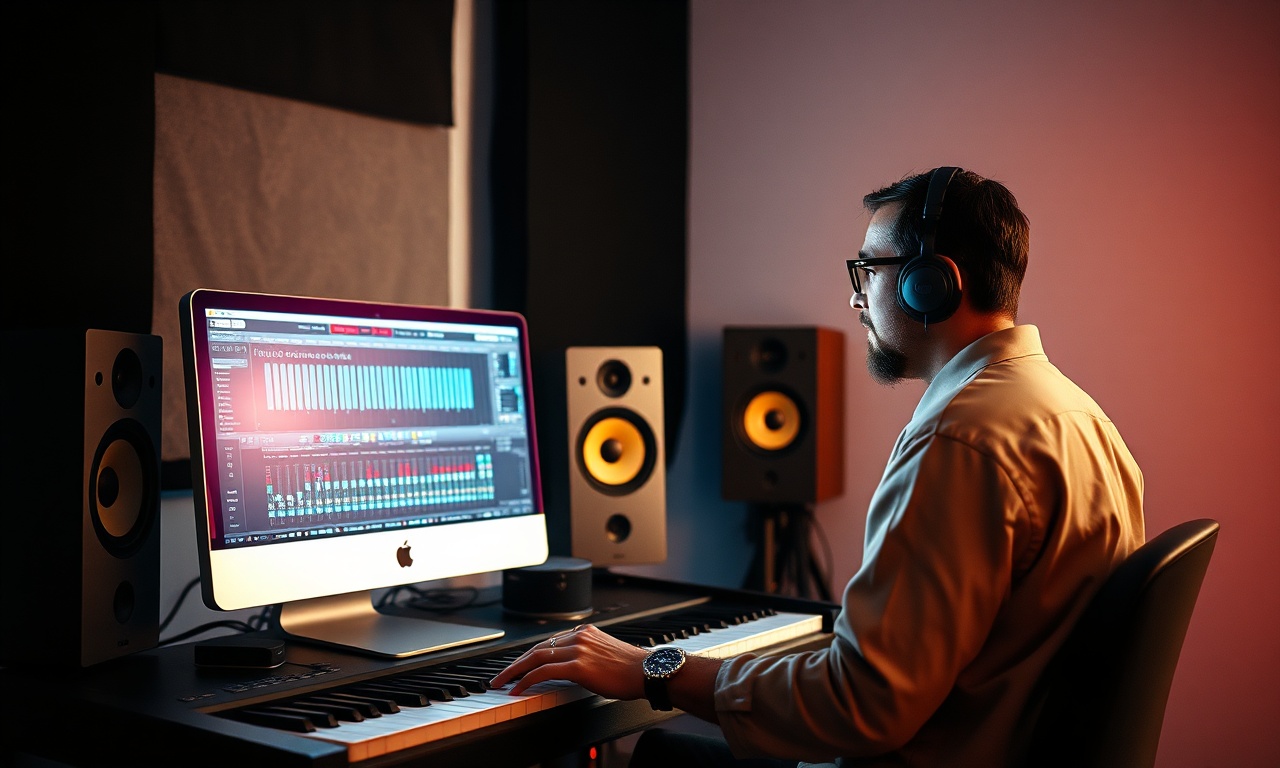
The Human-First Hybrid DAW Workflow
The secret to modern production is chaining these tools strategically into an authentic workflow where human taste dictates every key milestone:
Ideation
Composition
Sound Design
Restoration
Mixing
Master Polish
[1. Ideation]        Suno / Udio (Prompt hybrid motifs & export raw stems)
       │
       ▼
[2. Composition]     Scaler 2 (Extract chord roots & build custom voicing)
       │
       ▼
[3. Sound Design]    Synplant 2 (Genopatch transforms chops into playable synth patches)
       │
       ▼
[4. Restoration]     Waves Clarity VX & LALAL.AI (Clean background noise & isolate leads)
       │
       ▼
[5. Mixing]          Sonible smart:EQ 4 & Neutron 5 (Resolve cross-track spectral masking)
       │
       ▼
[6. Master Polish] Ozone 11 (Fine-tune dynamics & verify commercial loudness)- Ideation (0-15 Minutes): Generate 3-4 prompt seeds in Suno or Udio to explore tempo and unexpected stylistic combinations.
- Harmonic Refinement (15-30 Minutes): Import the chord structure into Scaler 2. Replace generic cadences with customized voice-leading.
- Sound Design (30-60 Minutes): Drop interesting textures into Synplant 2 to create expressive, velocity-sensitive synth patches.
- Vocal Polish (60-90 Minutes): Pass real vocal recordings through Waves Clarity VX to eliminate bedroom room rumble before applying analog-style saturation.
- Dynamic Mixing (90-120 Minutes): Connect smart:EQ 4 across clashing buses to dynamically carve room for the lead instruments without thinning the mix.
Producer's Verdict: Putting Art Before Algorithms
AI audio tools in 2026 are not replacements for human taste; they are friction reducers. When you use them to handle the mechanical, tedious aspects of production (cleaning fan noise, parsing vocal stems, identifying harmonic conflicts), you preserve your ears and mental energy for what actually matters: storytelling, groove, dynamic emotion, and personal artistic identity.
Choose one or two tools that address your specific studio bottlenecks, integrate them into your existing DAW template, and always trust your own ears above any algorithm.